
.png)

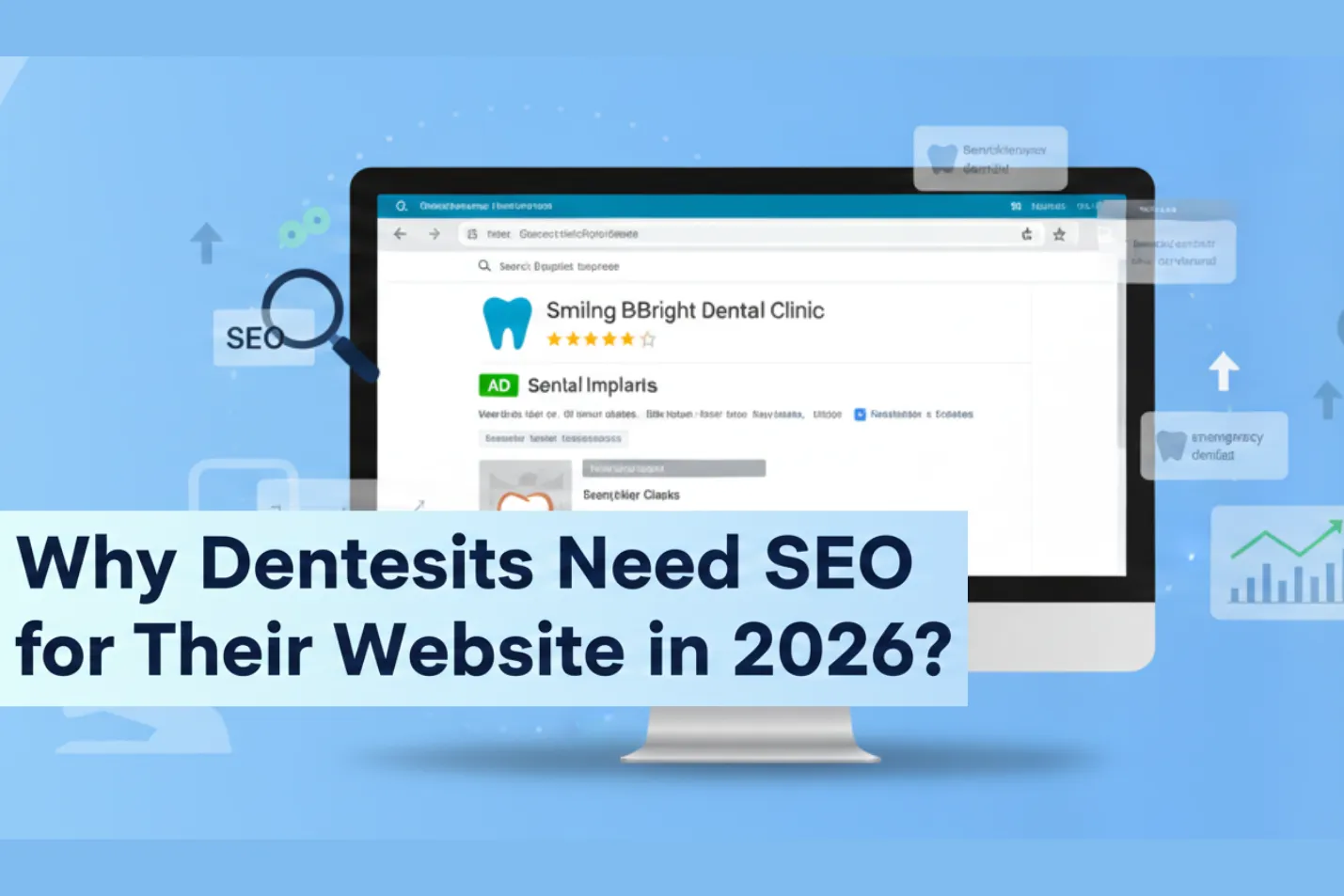

For decades, dental practices relied on three things: a sign on the street, word-of-mouth, and maybe a local directory. But as we move through 2026, the "digital front door" has officially replaced the physical one. If a patient can’t find you on the first page of Google—or more importantly, within an AI-generated search summary—your practice is effectively invisible.
Search Engine Optimization (SEO) for dentists is no longer a luxury marketing add-on; it is the fundamental infrastructure of a modern dental office. Here is why SEO is the most critical investment for dentists in 2026.
1. The Rise of AI Overviews (SGE)
In 2026, Google doesn't just show a list of blue links; it provides an AI Overview at the top of the search results. When a patient asks, "What are the best options for a missing tooth in [City]?", Google’s AI summarizes the answer directly.
If your website isn't optimized for "Generative Engine Optimization" (GEO), you won't be cited as a source in that AI summary. SEO ensures your content is structured in a way that AI models can read, trust, and recommend to prospective patients.
2. Dominating the Local "Map Pack"
For dentists, proximity is everything. Most patients will not travel more than 10–15 miles for general dentistry. When someone searches for a "dentist near me" or "emergency dentist," Google displays the Local 3-Pack—the three dental offices it trusts most in that specific area.
- Trust Signals: SEO helps you manage the signals—like consistent NAP (Name, Address, Phone) data and review velocity—that tell Google you are the most prominent local authority.
- The Proximity Win: Without a dedicated local SEO strategy, a competitor three blocks further away could steal your "neighbor" patients simply because their Google Business Profile is better optimized.
3. Capturing High-Intent "Problem-Aware" Patients
Not all website traffic is created equal. A person browsing Instagram might see a photo of a nice smile, but a person typing "cost of dental implants" or "how to fix a chipped tooth" into Google has high intent. They have a problem and are looking for a provider to solve it now.
SEO allows you to show up at the exact moment of need. By creating content that answers specific patient concerns, you move from being a "vendor" to a "trusted advisor" before they even book their first consultation.
4. Building "Topical Authority" in Specialized Services
Are you a general dentist who wants to do more Invisalign cases? Or perhaps a periodontist looking for more implant leads? Traditional advertising often casts a wide net, wasting money on people who don't need your specialized services.
SEO allows for surgical precision. By building "Topic Clusters" around high-value treatments—such as veneers, clear aligners, or sedation dentistry—you signal to search engines that you are a specialist. This helps you rank for specific, high-ticket keywords rather than just generic "dentist" terms.
5. Mobile-First Patient Behavior
By 2026, over 70% of dental-related searches happen on mobile devices. Patients are searching while at work, on the commute, or even while experiencing a dental emergency.
Modern SEO involves optimizing for Core Web Vitals:
- Speed: Does your site load in under 2 seconds?
- Responsiveness: Is the "Book Now" button easy to click on a thumb-operated screen?
- Security: Is your site HTTPS secure to protect patient data?
Google rewards websites that provide a seamless mobile experience, and patients are far more likely to convert on a site that feels professional and fast.
6. Combatting "Zero-Click" Searches
A "zero-click search" is when a user gets the information they need (like your phone number or hours) directly from the search result page without clicking through to your site.
Good SEO ensures that even if they don't click, your Google Business Profile is so well-optimized that they can "Click-to-Call" or get directions immediately. In 2026, visibility on the search page is just as valuable as a website visit.
Conclusion: Your Long-Term Digital Real Estate
Paid ads stop the moment you stop paying. SEO, however, is an investment in digital real estate. When you rank #1 for "Best Cosmetic Dentist," you own that spot. It provides a consistent, 24/7 stream of new patient leads that grows in value over time.
At our agency, we specialize in Local Search Domination and Healthcare Web Development specifically for dental practices. We don't just "get you more traffic"—we build the Practice Growth Infrastructure that turns searchers into lifelong patients.
Contact Us Today to see how we can help your practice rank #1 in the Map Pack and leverage our "Booking Bot" System to automate your patient acquisition. Let’s stop renting your traffic and start owning your market.
Frequently Asked Questions
Why is my dental website not showing up on Google? There are usually three culprits: poor technical SEO (slow speed or no mobile optimization), a lack of "local signals" (unoptimized Google Business Profile), or a lack of authoritative content that proves to Google you are an expert in your field.
Do I need a blog for my dental website? Yes. Blogs allow you to answer the "long-tail" questions patients are asking, such as "Is professional teeth whitening worth it?" This builds trust and helps you rank for hundreds of keywords that a simple service page cannot.
How many reviews do I need to rank #1? It’s not just about the number; it’s about velocity and recency. Google likes to see a steady stream of new reviews. Our Reputation Management system automates this process so you’re always the most "active" choice in your area.
What is the difference between SEO and Google Ads for dentists? Google Ads is "rented" space at the top of the page; you pay for every click. SEO is "owned" space; you earn your way to the top through quality and authority. A balanced strategy uses Ads for immediate leads and SEO for long-term, sustainable growth.