
.png)

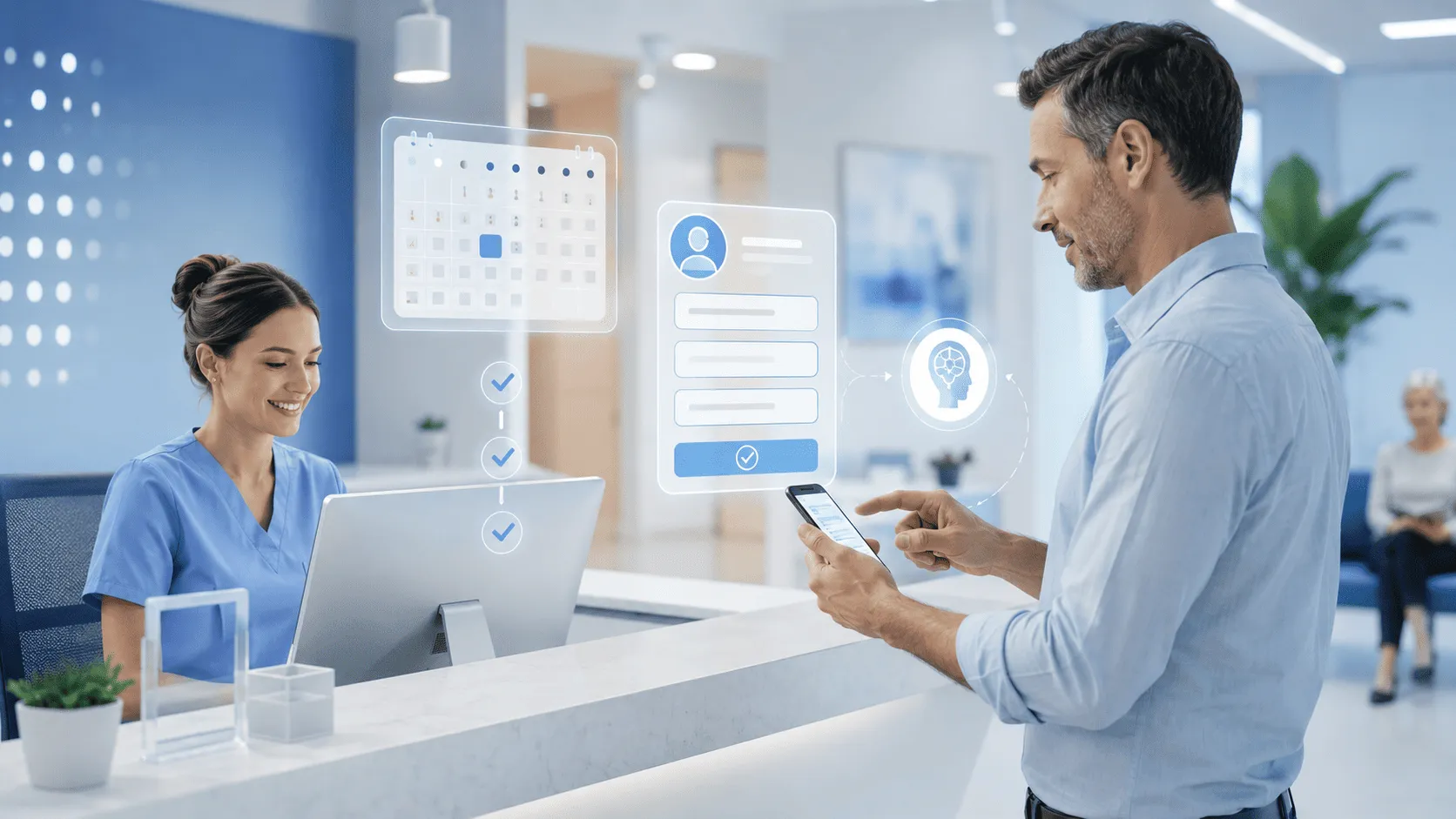

Clinics must adopt AI-powered digital front doors by 2026 to manage scalable patient intake efficiently. This strategy automates routine tasks like scheduling and eligibility verification, significantly reducing administrative burden and staff burnout. By optimizing patient flow and communication, practices can enhance the patient experience and grow without increasing headcount.
The traditional "phone-only" front desk is no longer sustainable for growing clinics. It presents a significant liability, directly impacting patient retention and operational efficiency. A staggering 63% of patients would consider switching providers due to poor communication or excessive hold times (as per Expert Insights). This alarming statistic highlights a critical "capacity" problem: How do you manage increased patient volume and administrative tasks without pushing your dedicated front desk staff to burnout or sacrificing the patient experience? The relentless cycle of "phone tag," manual insurance checks, and repetitive scheduling calls consumes valuable staff time, preventing them from focusing on high-value interactions that truly differentiate your practice. This administrative burden in healthcare not only stifles growth but also directly contributes to staff dissatisfaction and turnover, creating a costly bottleneck in your patient intake process.
Rethinking the Front Desk: Implementing a Digital Front Door Healthcare 2026
The future of scalable patient intake lies not in hiring more staff to answer more phones, but in strategically deploying technology to create a robust digital front door healthcare 2026. This isn't merely about adding a chatbot; it's about implementing a comprehensive, integrated ecosystem that automates the initial touchpoints of the patient journey. Consider a scenario where a prospective patient can discover your clinic, check appointment availability, understand insurance coverage, and complete pre-registration forms, all without a single phone call. This vision becomes a tangible reality through agentic automation, a sophisticated form of artificial intelligence that functions as an intelligent assistant, actively guiding patients through processes rather than merely responding with pre-programmed scripts (as per Expert Insights).
An effective digital front door system begins with accessible online portals and user-friendly mobile interfaces that integrate seamlessly with your existing EHR and practice management software. Patients can initiate contact at their convenience, often outside of traditional office hours, through channels like secure web forms, dedicated patient portals, or even through interactive voice response (IVR) systems leveraging AI. This drastically reduces the incoming call volume for routine inquiries, allowing your human staff to handle exceptions and more complex patient needs. For example, a new patient interested in your services can visit your website, find an "Appointment Request" button, and be guided through a series of questions that pre-qualify their needs and gather necessary demographic information. This initial digital interaction captures crucial data, reducing the need for lengthy intake interviews over the phone. Furthermore, an advanced digital front door might include integrated healthcare digital marketing agency tools, optimizing your online presence through local SEO for healthcare and local SEO for medical website strategies to attract new patients effectively, directly feeding into your automated intake process. This holistic approach ensures that from the moment a patient considers your practice, their journey is streamlined, efficient, and user-centric, setting a positive tone for their overall patient experience.
Healthcare Workflow Automation: Streamlining Core Operations Beyond the Phone
The true power of a digital front door healthcare 2026 emerges when deeply integrated with comprehensive healthcare workflow automation. This extends far beyond mere online scheduling; it involves automating repetitive, high-volume administrative tasks that currently bog down your front desk. Imagine a system where a new patient's self-service registration automatically triggers an insurance eligibility verification software check. This isn't mere theoretical speculation; for 2026, automation goes beyond a simple "bot." It acts as an intelligent agent, capable of real-time insurance verification, seamless calendar synchronization, and contextual call routing. This significantly reduces the "clerical noise" that currently consumes valuable front desk staff time (as per Expert Insights).
For instance, when a patient submits their insurance details through a secure portal, the system instantly communicates with payers to confirm coverage and benefits. This pre-verification process means your front desk no longer spends hours on the phone chasing down insurance details, preventing frustrating surprises for both patients and staff at the time of service. This same agentic automation can manage automated patient scheduling, offering patients available slots based on provider capacity planning and specific service requirements. It then automatically sends appointment confirmations and reminders through two-way patient messaging. If a patient cancels, the system can instantly offer that slot to other waiting patients via text or email, optimizing your schedule and minimizing no-shows. This creates a much smoother patient flow management system.
Consider a scenario where a patient needs a pre-procedure consultation. Instead of manual follow-up calls, the automated workflow can:
- Confirm the appointment.
- Send a link for pre-surgical forms and educational materials.
- Remind the patient of necessary preparations.
- Even collect co-pays or upfront payments securely.
This level of automation significantly reduces the administrative burden in healthcare, allowing your front office team to pivot from transactional tasks to transformational patient care. By offloading these routine, repetitive actions, staff can dedicate their expertise to complex insurance advocacy, in-depth patient education, or empathetic pre-surgical counseling, fostering deeper patient relationships and improving overall patient satisfaction (as per Expert Insights). This strategic reallocation of human resources not only boosts operational efficiency but also enhances staff morale by enabling them to perform more meaningful work, directly contributing to clinic operational efficiency.
AI Front Desk for Clinics: Empowering Staff, Not Replacing Them
The concept of an AI front desk for clinics might understandably conjure images of human replacement. In reality, however, advanced 2026 automation functions as a powerful, collaborative partner to your existing staff. It augments human capabilities, handling the mundane so your team can focus on the indispensable. This agentic automation excels at managing initial patient interactions, answering frequently asked questions, and guiding patients through processes like patient self-service registration. Imagine an AI that can handle 80% of routine inquiries, leaving the 20% requiring nuanced judgment or empathetic human touch to your skilled team.
For example, when a patient calls with a general inquiry about office hours, accepted insurance, or how to request a prescription refill, the AI front desk can instantly provide accurate, pre-approved responses. If the patient's query is more complex, such as discussing a specific medical concern or requiring emotional support, the AI can intelligently route the call to the appropriate human staff member, providing them with a transcript of the prior interaction and relevant patient context. This contextual routing proves crucial for optimizing the patient experience, as it eliminates the frustrating need for patients to repeatedly provide the same information, a common source of dissatisfaction.
Furthermore, an AI front desk can be instrumental in insurance eligibility verification software. It instantly checks a patient's coverage details, co-pays, and deductibles before their appointment, preventing billing surprises and streamlining the financial aspects of care. This capability drastically reduces the time staff spend on phone calls with insurance providers, offering a prime example of reducing "clerical noise." By integrating with your EHR, the AI can also facilitate automated patient scheduling, allowing patients to book, reschedule, or cancel appointments based on real-time availability. This not only empowers patients with greater control over their care journey but also frees up your front desk to manage provider capacity planning more strategically, ensuring optimal utilization of your clinic's resources. The result is a more efficient, less stressed front office, capable of handling higher patient volumes while maintaining a personal, compassionate approach where it matters most.
Optimizing Patient Experience Optimization Through Self-Service and Communication
Successfully scaling patient intake hinges on prioritizing patient experience optimization. In today's competitive healthcare landscape, patients increasingly expect convenience, transparency, and timely communication, mirroring the streamlined experiences they encounter in retail and other service industries. The shift towards patient self-service registration and robust two-way patient messaging is paramount in meeting these expectations and reducing the administrative burden in healthcare. When patients can manage their own administrative tasks, it not only lightens the load on your front desk but also gives them a sense of control and empowerment, leading to higher satisfaction.
Consider the journey of a new patient. Instead of a lengthy phone call to gather demographic and insurance information, they receive a secure link to complete their registration forms online at their leisure. This process, facilitated by patient self-service registration, means less time filling out clipboards in the waiting room and more time engaging with their care provider. The system then automatically triggers insurance eligibility verification software checks based on the submitted data, providing transparency about their financial responsibility before the appointment.
Beyond initial registration, two-way patient messaging revolutionizes communication. Gone are the days of endless "phone tag" for appointment reminders, lab results, or follow-up instructions. A secure messaging platform allows clinics to send automated appointment confirmations, preparation instructions, and post-visit summaries directly to patients' preferred devices. Patients can then respond with questions, confirm appointments, or request prescription refills, all within a HIPAA-compliant automation framework. This instant, asynchronous communication drastically reduces inbound calls and allows staff to respond to queries efficiently without being tied to the phone. For example, a patient can receive a message regarding their annual check-up due date and, with a simple reply, schedule their appointment, directly integrating with automated patient scheduling systems. This streamlined approach fosters a sense of proactive care and transparency, significantly improving overall patient satisfaction and creating a more efficient, patient-centric environment. Such digital patient engagement platforms are crucial for modern medical practice efficiency.
Read More:
Ensuring HIPAA-Compliant Automation and Building Trust Digitally
As clinics embrace healthcare workflow automation and an AI front desk for clinics, the paramount concern is always the security and privacy of Protected Health Information (PHI). Trust forms the foundation of the patient-provider relationship, and any move towards digital transformation must be underpinned by robust HIPAA-compliant automation. It's not enough for a system to be efficient; it must be absolutely secure. The fear of data breaches or PHI exposure acts as a significant barrier to adopting new technologies, making rigorous compliance a non-negotiable requirement for any scalable patient intake solution.
Advanced 2026 solutions understand this critical need. They are built with a "Zero-Trust Architecture" (as per Expert Insights), meaning that every interaction and data access request is verified, regardless of whether it originates inside or outside the network. This architecture ensures that PHI is never exposed to unsecured Large Language Model (LLM) training sets (as per Expert Insights), a vital distinction in an era where AI models are rapidly evolving. For instance, when an AI agent verifies insurance or processes patient self-service registration, it does so within a highly secure, encrypted environment, with strict access controls and audit trails. The data never leaves the secure, controlled system to "train" a publicly accessible AI model.
Practical measures for HIPAA-compliant automation include:
- End-to-End Encryption: All data, both in transit and at rest, must be encrypted using industry-standard protocols. This protects information during two-way patient messaging and when being stored in patient portals.
- Role-Based Access Control: Only authorized personnel with specific roles should have access to certain types of patient data. The AI system itself operates under defined permissions, ensuring it only accesses data necessary for its designated tasks.
- Regular Security Audits and Penetration Testing: Continuous assessment of the system's vulnerabilities helps identify and mitigate potential risks proactively.
- Data Minimization: Only collecting and processing the minimum amount of PHI necessary for a given task.
- Consent Management: Ensuring clear patient consent for data collection and use, especially for digital interactions.
By rigorously adhering to these principles, clinics can confidently deploy AI-powered tools and digital front doors, knowing they are not only enhancing operational efficiency and medical practice efficiency but also upholding the highest standards of patient privacy and trust. Ultimately, this unwavering commitment to security transforms any potential apprehension into a robust foundation of reliability and trust for patients, staff, and leadership alike.
ROI of Human Focus: Reclaiming Time with Clinic Operational Efficiency
The ultimate payoff of embracing healthcare workflow automation and an AI front desk for clinics isn't merely about cutting costs, but about radically improving clinic operational efficiency by redirecting your most valuable asset: your human staff. By automating "clerical noise" such as routine scheduling calls, insurance eligibility verification software checks, and repetitive registration queries, staff can reclaim significant portions of their day (as per Expert Insights). This reclaimed time is not for idle hands; it presents a crucial opportunity for staff to focus on high-value interactions that genuinely impact patient outcomes and satisfaction, thereby significantly boosting overall medical practice efficiency.
Consider the qualitative difference in a front desk role. Instead of endless phone tag for appointments or spending hours verifying insurance, staff can:
- Provide personalized patient support: They can dedicate more time to pre-surgical counseling, guiding anxious patients through complex procedures, or offering emotional support during difficult diagnoses. This personalized attention significantly enhances patient experience optimization.
- Engage in complex case management: For patients with intricate insurance plans or multiple specialist appointments, human staff can provide dedicated advocacy and navigation, ensuring seamless coordination of care.
- Proactively address patient needs: With less administrative burden, staff can proactively follow up with patients who have missed appointments, conduct wellness calls, or provide additional educational resources, fostering stronger patient-provider relationships.
- Improve internal communication and training: Freed from repetitive tasks, staff can participate in ongoing training, process improvement initiatives, and collaborative efforts to further enhance patient flow management and overall practice efficiency.
This shift in focus translates directly into tangible benefits. Enhanced patient experience often leads to increased patient loyalty, better online reviews, and more referrals, contributing to sustainable growth. Reduced staff burnout improves morale, decreases turnover, and attracts higher-quality candidates for open positions, minimizing the hidden costs associated with constant hiring and training. The ROI of human focus is not just financial; it's about building a more resilient, empathetic, and effective healthcare practice where technology empowers people to deliver exceptional care.
Information Table: Key Features of Modern Healthcare Automation for Scalable Intake
Pro-Tips for Implementing Scalable Patient Intake
- Prioritize Agentic Automation over Basic Bots: Look for solutions that act as intelligent agents, capable of complex tasks like real-time insurance verification and contextual call routing, not just simple FAQ responses (as per Expert Insights). This ensures true healthcare workflow automation.
- Empower Staff with Reclaimed Time: Actively plan how your team will redirect their freed-up hours. Encourage them to focus on high-value interactions such as pre-surgical counseling or complex insurance advocacy, improving patient experience optimization (as per Expert Insights).
- Demand Zero-Trust Architecture: When evaluating HIPAA-compliant automation solutions, ensure they explicitly state the use of Zero-Trust Architecture to prevent PHI exposure to unsecured LLM training sets (as per Expert Insights). This is non-negotiable for patient data security.
- Integrate for Seamless Patient Flow: Opt for solutions that seamlessly integrate with your existing EHR and practice management systems. Disconnected tools create new administrative burdens and hinder true clinic operational efficiency.
- Measure Impact Beyond Cost Savings: While efficiency is key, track improvements in patient satisfaction scores, staff morale, and provider capacity utilization to fully understand the ROI of your scalable patient intake strategy.
- Leverage Digital Marketing Strategically: Partner with a medical advertising agency or use insights from a healthcare digital marketing agency to ensure your digital front door is discoverable and optimized through local SEO for healthcare, driving qualified leads directly into your automated intake funnels.
FAQ
Q. What is a "Digital Front Door" in healthcare?
A. A "Digital Front Door" in healthcare refers to an integrated, AI-powered system that automates and streamlines patient interactions from initial contact through scheduling and pre-registration. It uses tools like online portals, patient self-service registration, and automated patient scheduling to provide a seamless, convenient entry point for patients, significantly reducing administrative burden and improving patient experience optimization.
Q. How does AI improve patient scheduling and reduce phone tag?
A. AI improves patient scheduling by offering automated patient scheduling tools that allow patients to book, reschedule, or cancel appointments 24/7 based on real-time availability. This agentic automation eliminates the need for manual phone calls, reducing "phone tag" and freeing up front desk staff. It also optimizes provider capacity planning by dynamically managing appointment slots.
Q. Is patient data secure with AI-powered automation?
A. Yes, top-tier AI-powered automation solutions are designed with robust HIPAA-compliant automation. They employ "Zero-Trust Architecture" and end-to-end encryption to ensure Protected Health Information (PHI) is secure. This means PHI is never exposed to unsecured LLM training sets, protecting patient privacy and maintaining trust while streamlining healthcare workflow automation.
Q. How can automation help with insurance verification?
A. Automation drastically helps with insurance verification through specialized insurance eligibility verification software. These systems can instantly check a patient's coverage, co-pays, and deductibles in real-time. This eliminates the need for staff to make lengthy phone calls to payers, preventing billing surprises, reducing administrative burden, and allowing staff to focus on more complex patient needs.
Q. What are the benefits of patient self-service registration?
A. Patient self-service registration empowers patients to complete necessary forms and provide information online at their convenience before an appointment. This reduces waiting room time, improves data accuracy, and significantly lessens the administrative burden on front desk staff. It also enhances patient experience optimization by offering a modern, efficient, and transparent onboarding process.