
.png)

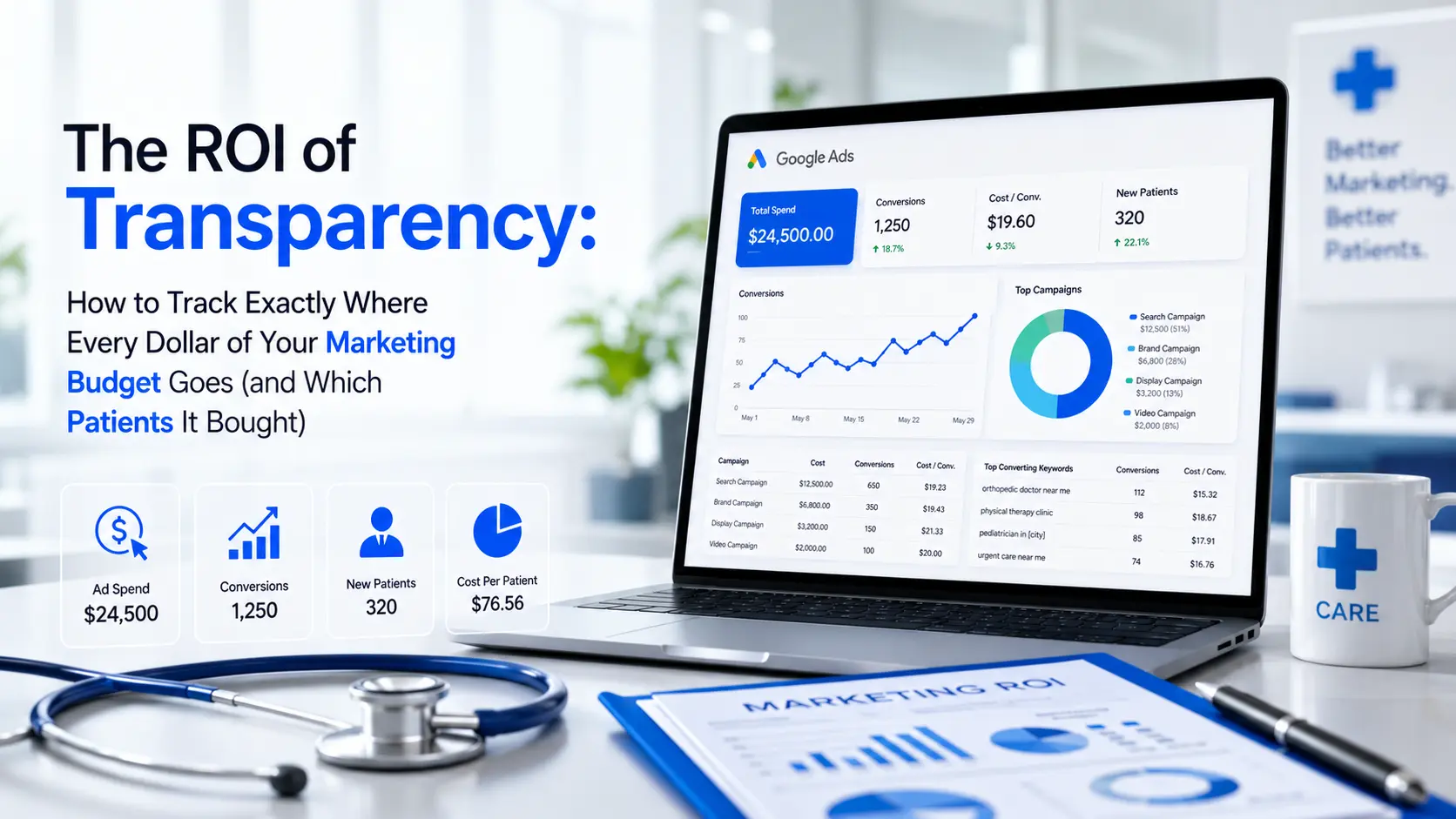

Uncertainty about marketing effectiveness plagues many healthcare organizations, hindering strategic growth. By implementing comprehensive Healthcare Lead Tracking and advanced Healthcare Conversion Tracking, clinics and hospitals precisely monitor their Healthcare Marketing Budget. They determine exact Patient Acquisition Cost and attribute specific patient enrollments to individual campaigns. This transparency empowers data-driven optimization, significantly boosting Healthcare Marketing ROI.
Key Takeaways
Achieving genuine Healthcare Marketing ROI demands granular tracking of every budget dollar and its direct impact on patient acquisition. Many healthcare businesses struggle to measure marketing success due to fragmented data and a lack of clear attribution. Robust Healthcare Lead Tracking requires enhanced conversion tracking, CRM integration, and multi-channel attribution models to optimize your Healthcare Marketing Budget and Patient Journey Tracking. This systematic approach fosters confidence and supports data-driven decision-making.
Healthcare business owners universally struggle to answer a fundamental question: "Is my marketing spend actually bringing in new patients?" This uncertainty forms a significant impediment to growth. Many healthcare businesses grapple with a disconnect between their marketing expenditures and tangible patient acquisition, leading to wasted budget and missed opportunities. Without clear data on Healthcare Marketing ROI and Patient Acquisition Cost, informed decisions about future investments become a high-stakes guessing game. This ultimately stifles potential growth and erodes confidence in Healthcare Digital Marketing efforts. The absence of transparency not only complicates budget allocation but also prevents the strategic adjustments vital for long-term success.
Unlocking True Healthcare Marketing ROI with Granular Tracking
Measuring Healthcare Marketing ROI presents a persistent challenge for clinics, hospitals, and medical practices. Healthcare businesses often struggle to measure marketing success due to fragmented data sources and a lack of clear attribution modeling. Marketing efforts might generate website visits, phone calls, or form submissions, but linking these initial interactions directly to a booked appointment, or even a long-term patient, remains elusive for many. This disconnect obscures the actual impact of marketing activities on Patient Acquisition Cost and revenue. For instance, a patient might see an advertisement for a specialist, visit their website, then later call to book an appointment. Without granular tracking, while clinics might note the phone call, they often lose sight of the initial ad’s critical role in the Patient Journey Tracking. This leads to an inaccurate picture of marketing effectiveness and misinformed budget decisions.
To overcome this, clinics require comprehensive Healthcare Lead Tracking. This means building a system where clinics can connect every marketing touchpoint to the patient's journey, from initial interest to appointment and beyond. This approach provides a unified view, allowing healthcare providers to understand precisely which specific channels, campaigns, and even keywords prove most effective in attracting valuable patients. A dental clinic running a campaign for new patient exams, for example, might track not just the clicks on its Healthcare PPC Campaigns, but also subsequent form submissions, the scheduling of the appointment, and even the patient's attendance at that first visit. This level of detail transforms vague assumptions into actionable insights. Understanding the full Patient Journey Tracking from awareness to conversion becomes critical for identifying bottlenecks, optimizing marketing spend, and ultimately improving Healthcare Marketing ROI. By embracing this transparency, medical practices move beyond merely spending their Healthcare Marketing Budget; they invest it strategically, gaining a clear understanding of the measurable returns.
The ultimate goal moves beyond mere impressions or clicks. Clinics instead measure qualified leads that convert into actual patients. This objective requires a robust infrastructure capable of tracking both online interactions and integrating offline conversions, such as phone calls and in-person appointments. When healthcare businesses accurately attribute patient acquisition to specific marketing efforts, they gain the confidence needed to scale successful campaigns and discontinue underperforming ones. This systematic approach forms the bedrock of an effective Medical Marketing Strategy, enabling precise ROI Tracking for Clinics and hospitals.
Implementing Robust Healthcare Conversion Tracking and Google Ads for Healthcare
To precisely track Paid Patient Acquisition Cost and understand the effectiveness of your Healthcare Marketing Budget, robust Healthcare Conversion Tracking is non-negotiable, especially for Google Ads for Healthcare campaigns. Google Analytics plays a central role here, empowering healthcare organizations to monitor specific website actions that indicate a user's intent or progression towards becoming a patient. These conversions can include filling out an "appointment request" form, clicking a "call now" button, downloading patient information, or viewing a specific service page that signifies high intent. Setting these up correctly requires clinics to define clear conversion goals within Google Analytics and ensure proper implementation of tracking code across the website. For a multi-specialty clinic, this might involve tracking different form submissions for different departments, such as "Cardiology Appointment Request" versus "Dermatology Consultation," providing granular data on patient interest. This level of segmentation ensures that you're not just tracking generic leads, but truly understanding the specific needs and interests driven by each campaign or service.
For advertising platforms like Google Ads, the setup of conversion actions proves even more critical, directly impacting the optimization of your Healthcare PPC Campaigns. Google Ads allows users to track these specific actions, linking them back to the ads that drove them and providing invaluable data for your Healthcare Marketing Analytics. Enhanced conversions represent a significant advancement in this area, improving the accuracy of conversion measurement. Enhanced conversions securely send hashed first-party data, such as email addresses, from your website to Google in a privacy-safe way. This feature facilitates a more precise match between ad clicks and conversions that might otherwise be missed due to cookie restrictions or user settings. For example, if a patient clicks your Google Ad on their desktop, then completes a conversion form on their mobile phone days later without cookies, Enhanced conversions can attribute that conversion back to the original ad, leading to a much clearer understanding of your Healthcare Marketing ROI. This detailed attribution reduces guesswork and optimizes ad spend. Furthermore, using Enhanced conversions helps to bridge data gaps that arise from stricter browser privacy policies, providing a more reliable foundation for bid strategies and budget allocation within Google Ads, ultimately making your ad spend more efficient.
Managing these various tracking codes and tags across your website can become complex. Google Tag Manager serves as an indispensable tool for this challenge. Google Tag Manager allows you to deploy and manage all your website tags, including those for Google Analytics, Google Ads conversion tracking, and other third-party marketing tools, from a single, user-friendly interface. This eliminates the need for direct website code modification with every change. The tool streamlines the process, reduces the risk of errors, and empowers healthcare marketers to quickly implement new tracking features or adjust existing ones. It also provides version control and preview modes, which are crucial for testing new tags without affecting live site performance. By utilizing these tools effectively, healthcare businesses transition from guesswork to data-driven decision-making, ensuring that every dollar in their Healthcare Marketing Budget actively works towards acquiring new patients. This precision in Healthcare Conversion Tracking forms the foundation for an optimized Medical Marketing Strategy, allowing clinics to identify exactly which Google Ads for Healthcare campaigns acquire which patients.
Pro-Tip: Regular Tracking Audits
Regularly audit your Healthcare Conversion Tracking setup within Google Analytics and Google Ads. Ensure all conversion actions are firing correctly, match your business goals, and avoid duplicating data. Use diagnostic tools in Google Ads Help Center to verify Enhanced conversions implementation. This vigilance ensures your Healthcare Marketing Analytics are always accurate and trustworthy, providing a reliable basis for investment.
Mastering Patient Acquisition Cost Through Multi-Channel Attribution Modeling

Calculating an accurate Patient Acquisition Cost (PAC) presents a significant hurdle for many healthcare organizations because the patient journey rarely follows a linear path. Patients often interact with multiple marketing touchpoints across different channels before finally booking an appointment or becoming a new patient. This complexity underscores the critical role of Attribution modeling, specifically Multi-channel attribution, in correctly assigning credit to all interactions within the Patient Journey Tracking. Relying solely on a "last-click" model, which gives 100% of the credit to the final interaction before conversion, severely undervalues crucial early-stage Healthcare Digital Marketing efforts. For instance, a patient might first discover a new medical practice through an educational blog post (organic search), later see a relevant Google Ads for Healthcare campaign, and finally convert after receiving an email reminder. A last-click model would give all credit to the email, ignoring the foundational role of the organic content and the ad in attracting that patient. This incomplete picture distorts marketing value.
Multi-channel attribution offers a more holistic view by distributing credit across various touchpoints. Several Attribution modeling options exist:
- First-click attribution gives full credit to the very first interaction, useful for understanding initial awareness.
- Linear attribution distributes credit equally among all touchpoints, acknowledging every step.
- Time decay attribution gives more credit to touchpoints closer to the conversion, emphasizing recent influence.
- Position-based attribution assigns more credit to the first and last interactions, with the remaining credit distributed among middle interactions, balancing initial discovery with final persuasion.
- The most sophisticated option, Data-driven attribution, uses machine learning to assign credit based on actual conversion paths, providing the most accurate insights into your Healthcare Marketing ROI. This model proves particularly beneficial for complex Patient Journey Tracking in healthcare, as it accounts for the unique influence of each touchpoint. Understanding these models allows healthcare marketers to move beyond simple last-touch metrics and truly grasp the intricate journey patients take, enabling more informed decision-making about where to invest resources at each stage.
Implementing Multi-channel attribution allows healthcare businesses to track patient acquisition from both ads and organic channels. This means understanding the precise contribution of Healthcare PPC Campaigns, SEO efforts, social media engagement, email marketing, and content marketing towards acquiring a new patient. For example, a clinic promoting a new fertility service might find that while its Google Ads drive immediate conversions, its informative blog posts about fertility health significantly contribute to initial awareness and trust, ultimately leading to conversions down the line. By analyzing various attribution models, marketers identify which channels are most effective at different stages of the conversion funnel optimization. This enables a more intelligent allocation of the Healthcare Marketing Budget, ensuring that investments are made in channels that genuinely contribute to patient acquisition, rather than just those that happen to be the last touchpoint. Understanding the true Patient Acquisition Cost through Multi-channel attribution empowers medical practices to optimize their entire Medical Marketing Strategy for sustainable growth. It provides the nuanced perspective needed to appreciate the synergistic effects of different marketing channels, rather than viewing them in isolation.
Streamlining Data with CRM Integration and Advanced Healthcare Marketing Analytics
For truly transparent and impactful Healthcare Marketing ROI, closing the loop between initial marketing interactions and actual patient appointments and treatments becomes essential. This critical connection is often missing, leaving healthcare businesses with incomplete data. Robust CRM integration offers the solution, linking your marketing data with your patient management system. When marketing platforms, such as Google Ads or your website's form submissions, integrate with your Customer Relationship Management (CRM) system, the full Patient Journey Tracking becomes visible. For example, when a patient fills out an inquiry form on your website, the system automatically pushes that information into your CRM. Crucially, if that lead originated from a specific Healthcare PPC Campaign or an organic search for a particular service, the system carries that attribution data over into the CRM. This allows clinics to track a prospect from being a Marketing Qualified Lead (MQL) through to a scheduled appointment, and eventually, a paying patient. This seamless data flow eliminates manual data entry, reduces errors, and provides a continuous, real-time record of each patient's interaction with your practice, from first touch to long-term care.
This level of CRM integration not only enhances Healthcare Lead Tracking but also feeds directly into advanced Healthcare Marketing Analytics. With integrated data, healthcare marketers build comprehensive Data visualization dashboards that offer real-time insights into campaign performance, patient acquisition trends, and overall Healthcare Marketing Budget efficiency. These dashboards display metrics such as Patient Acquisition Cost broken down by channel, conversion rates at different stages of the patient journey, and even the Customer Lifetime Value (CLTV) for patients acquired through specific campaigns. Understanding CLTV proves particularly powerful in healthcare, as it shifts the focus from just the initial acquisition cost to the long-term revenue generated by a patient over their entire relationship with the practice. A high CLTV for patients acquired through a specific channel might justify a higher initial Patient Acquisition Cost for that channel, revealing the true value of certain marketing efforts. Such insights allow for more strategic investments, prioritizing channels that not only bring in patients but also bring in patients who become long-term, high-value clients.
Furthermore, CRM integration supports a First-party data strategy, an increasingly important aspect in a privacy-focused world. By owning and managing your patient data directly, you can personalize Digital patient engagement efforts while rigorously maintaining HIPAA compliance. For instance, if your CRM records a patient inquired about a specific dental procedure via a Google Ad, future email marketing or follow-up calls can be precisely tailored to that interest. This personalized approach not only improves patient experience but also enhances the likelihood of conversion and retention, directly contributing to a higher Healthcare Marketing ROI. It allows for highly targeted follow-up campaigns, appointment reminders, and educational content that resonates deeply with individual patient needs, leading to better outcomes and stronger patient loyalty. Without CRM integration, healthcare marketers often contend with siloed data, making it impossible to truly understand which marketing dollars translate into actual patient care and revenue. This integrated approach ensures that every aspect of your Medical Marketing Strategy remains transparent, trackable, and optimized for maximum impact.
Sharpening Decisions: The Long-Term ROI of Transparency in Healthcare Marketing Budget Allocation
The ultimate benefit of transparent Healthcare Lead Tracking and comprehensive Healthcare Marketing Analytics extends far beyond simply knowing your Patient Acquisition Cost for individual campaigns. It fundamentally transforms how healthcare businesses approach their Healthcare Marketing Budget allocation and long-term strategic planning. When clinics can trace every dollar to a specific outcome, confidence in marketing efforts skyrockets. This clarity enables continuous Conversion funnel optimization, allowing clinics to identify and address bottlenecks in the patient journey. For instance, if Healthcare Conversion Tracking data reveals that many patients click on your Google Ads for Healthcare but abandon the process at the online scheduling page, clinics can divert resources to improve that specific page's user experience, rather than merely increasing ad spend on underperforming assets. This targeted optimization ensures more efficient use of resources and a smoother, more effective patient experience, directly impacting conversion rates.
This data-driven transparency fosters an environment where marketing decisions no longer rely on guesswork or industry averages, but on proprietary insights derived from your own patient base. This clarity leads to significantly improved long-term decision-making. Healthcare businesses confidently scale successful campaigns, reallocate funds from underperforming channels, and even experiment with new marketing strategies, all with a clear understanding of potential ROI Tracking for Clinics. For example, a hospital might discover through Multi-channel attribution that while its print ads generate brand awareness, its Healthcare PPC Campaigns using specific keywords are directly responsible for the highest volume of qualified appointment requests. With this knowledge, they strategically adjust their Healthcare Marketing Budget to maximize the impact of their digital spend while maintaining a targeted presence in traditional media. This strategic agility prevents wasted resources and focuses investment where it matters most, leading to sustained growth and competitive advantage.
Moreover, a robust First-party data strategy, enabled by integrated tracking and CRM systems, becomes an invaluable asset for future growth. By collecting and analyzing data directly from patient interactions, healthcare providers gain deeper insights into patient preferences, needs, and behaviors. This knowledge informs the creation of more personalized Digital patient engagement strategies, improves patient retention, and even guides the development of new services. The transparency meticulously created by comprehensive tracking also builds trust among stakeholders, from clinic managers to hospital boards, demonstrating clear accountability for the Healthcare Marketing Budget. This long-term view of Healthcare Marketing ROI isn't just about immediate patient acquisition, but about building a sustainable, data-informed Medical Marketing Strategy that drives continuous improvement and sustained growth, ultimately enhancing the overall value of the healthcare practice.
Information Table: Key Components for Transparent Healthcare Marketing ROI Tracking
Pro-Tips for Maximizing Your Healthcare Marketing ROI
- Align Goals with Tracking: Before implementing any tracking, clearly define what constitutes a "conversion" for your practice (e.g., appointment booked, specific service inquiry). This ensures your Healthcare Conversion Tracking focuses on high-value actions for your Medical Marketing Strategy.
- Utilize Enhanced Conversions: Implement Enhanced conversions in Google Ads to capture more accurate conversion data. This proves especially crucial as privacy measures evolve, providing a clearer picture of your Healthcare Marketing ROI.
- Embrace Multi-channel Attribution: Do not rely solely on last-click attribution. Experiment with different Attribution modeling options (like data-driven attribution) to understand the full impact of your Healthcare Digital Marketing efforts across the entire Patient Journey Tracking.
- Prioritize CRM Integration: Ensure your marketing platforms communicate directly with your CRM. This CRM integration is vital for tracking leads from initial interest (MQL) to becoming an actual patient and understanding their Customer Lifetime Value (CLTV).
- Focus on First-Party Data: Develop a robust First-party data strategy by collecting and utilizing data directly from your patient interactions. This provides greater control, enables personalized Digital patient engagement, and helps ensure HIPAA compliance.
- Regularly Analyze Data: Do not just collect data; analyze it. Use Data visualization dashboards for your Healthcare Marketing Analytics to identify trends, optimize your Healthcare Marketing Budget, and inform strategic decisions for ROI Tracking for Clinics.
Read More About Paid Patient Acquisition
FAQ Section
- Why do healthcare businesses struggle with measuring marketing ROI?
Healthcare businesses often struggle due to fragmented data sources, making it hard to connect initial marketing interactions with actual patient appointments. A lack of robust Attribution modeling means they cannot accurately credit different marketing touchpoints, leading to an unclear understanding of what drives patient acquisition. This prevents effective Healthcare Marketing Budget allocation.
- What is multi-channel attribution and why is it important for patient acquisition?
Multi-channel attribution is a method of assigning credit to various marketing touchpoints a patient interacts with along their Patient Journey Tracking before conversion. It is crucial because patients rarely convert through a single channel; they research across multiple platforms. This approach provides a more accurate Patient Acquisition Cost and a better understanding of overall Healthcare Marketing ROI.
- How does CRM integration improve healthcare marketing effectiveness?
CRM integration links marketing lead data with actual patient records, allowing healthcare providers to track a prospect from being a Marketing Qualified Lead (MQL) to a booked appointment and beyond. This unified view is essential for understanding Customer Lifetime Value (CLTV), personalizing Digital patient engagement, and providing comprehensive Healthcare Marketing Analytics that inform better decision-making.
- What are Enhanced conversions in Google Ads and why should healthcare marketers use them?
Enhanced conversions improve the accuracy of Healthcare Conversion Tracking in Google Ads by securely sending hashed first-party data (like email addresses) from your website to Google. Healthcare marketers should use them to gain a more complete and accurate picture of which Google Ads for Healthcare campaigns are driving actual patient conversions, especially in light of evolving privacy standards.
- How can I ensure HIPAA compliance when tracking patient data for marketing?
Ensuring HIPAA compliance when tracking patient data involves using secure, encrypted platforms for data collection and storage, obtaining necessary patient consents, and implementing strict access controls. A robust First-party data strategy should prioritize patient privacy and data security. Integrating marketing tools with HIPAA-compliant CRM systems is also crucial to protect sensitive patient information throughout the Patient Journey Tracking.