


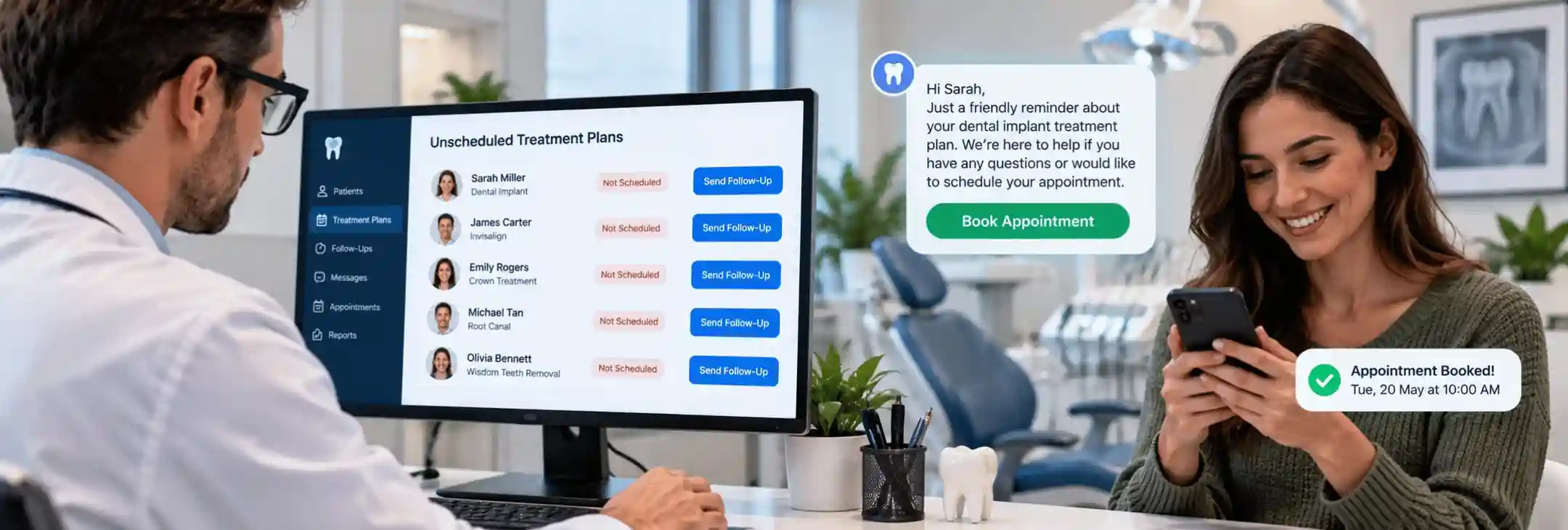

Australian dental practices regularly see patients agree to treatment and then leave without booking it. Those open plans represent revenue your dentists have already diagnosed. A structured unscheduled dental treatment follow-up process brings those patients back with timely and respectful contact.
Quick Answer on Unscheduled Dental Treatment Follow-Up
Most unscheduled treatment stalls on cost, fear or simple forgetting. A structured sequence across SMS, email and phone brings back revenue your team has already diagnosed. Each message works best with clear cost and rebate details plus a one-tap booking link.
Why Patients Don't Book Recommended Treatment
Most patients leave the chair fully intending to book. Life then gets in the way, and the plan slides down their list. One in four Australians who needed a dental professional in the 2025 financial year delayed the visit or skipped it. Cost held back 16 percent of people who needed dental care. The usual blockers fall into four groups.
1. Cost: Patients see a total and have no idea what the health fund will cover. Nobody mentioned payment plans either.
2. Fear: Anxious patients often agree in the chair and then quietly avoid the call.
3. Busy lives: Busy families and shift workers simply lose track of the plan.
4. Unclear value: The patient never fully understood why the treatment mattered now.
None of these reasons means the patient said no. Each one calls for a different message, which is why a single reminder rarely works. A good unscheduled dental treatment follow-up plan answers the real objection instead of repeating the same nudge.
Low dental case acceptance often looks like a clinical problem when it is really a communication gap. Most front desk teams can name five patients from last month who promised to call back and never did.
Also Read: Dental Practice SEO for Australian Clinics in 2026
Where the Revenue Sits in Your Practice Management Software
Every open plan with no future appointment shows up somewhere in your system. Most practice management software can filter treatment plans by status, value and the date the dentist presented them. The report should capture four details for each patient:
1. Treatment value and item numbers
2. The date the dentist presented the plan
3. Clinical urgency as the dentist rates it
4. Consent status for SMS and email
A practice that presents $80,000 of treatment a month and leaves 40 percent unbooked carries $32,000 of stalled work every month. That figure grows quietly until someone owns the list.
Your treatment coordinator is the natural owner of this list. The coordinator reviews it weekly and flags urgent cases for a call from the dentist.
A ranking of unscheduled treatment plans by urgency first and value second keeps clinical care ahead of revenue. Clean data also makes unscheduled dental treatment follow-up far easier to automate later.
An Unscheduled Dental Treatment Follow-Up Sequence That Converts
The sequence below spreads contact over six months. Each step has one job and one clear next action for the patient. Every message in this unscheduled dental treatment follow-up sequence identifies the practice and offers an easy opt-out.
Week 1
The first 48 hours matter most because the conversation is still fresh. A personal call within two days usually lands better than any text.
Day 1 SMS
Hi Sarah, This is Emma from Harbourside Dental. Dr Lee asked me to check whether you had any questions after your visit. Choose a time that suits you. You can reply STOP to opt out.
The message names the dentist but leaves out the procedure. SMS previews appear on lock screens, so health details belong on a call or behind a secure link.
Day 2 Coordinator Call
The best call opens with a question rather than a pitch. A line such as "Most people have a question or two after a visit like that, and I'd love to hear yours" works well. The coordinator listens for cost, fear or timing and notes the answer in the patient record.
Day 4 Email With Costs
This email carries the written estimate with item numbers, the expected gap and a booking link. Item numbers let the patient check health fund rebates directly with their insurer.
Weeks 2 to 4
Contact now shifts to the patient's objection.
Day 10 SMS for Cost Concerns
Hi Sarah, This is Emma from Harbourside Dental. We can split your treatment into stages or set up a payment plan. You can reply STOP to opt out.
Day 21 Email for Anxious Patients
This email explains comfort options such as longer appointments, breaks and sedation where the practice offers it. A short personal note from the dentist reassures far more than any template. Patients who stay silent after day 21 move to a slower track.
Months 2 to 6
Long gaps between messages protect goodwill and still keep the plan visible. This stage of unscheduled dental treatment follow-up runs mostly on light, scheduled messages.
Month 2 Check-In
Hi Sarah, This is Harbourside Dental. Your treatment plan from March is still on file and ready to book whenever it suits. You can pick a time. You can reply STOP to opt out.
The booking link takes the patient straight to open times without a phone call. Your Google Business Profile can hold that same booking link for patients who search your name months later.
Month 4 Benefits Reminder
Hi Sarah, This is Harbourside Dental. Many health funds reset extras limits on 1 January. Our team can check what your cover includes before the year ends. You can reply STOP to opt out.
This message works best in October or November. The plan then moves into your patient recall system after month six. The dentist can revisit it chairside at the next check and clean.
The Sequence at a Glance
Also Read: How to Scale Your Clinic Without Scaling Ad Spend
How a Dental CRM Automates the Whole Sequence
Manual outreach breaks down the moment the coordinator goes on leave. A dental CRM keeps every message, task and reply in one record. The automated SMS layer handles routine touches, while staff focus on calls that need a human voice. Good automation should do five things:
1. Start the sequence as soon as a plan leaves the chair unbooked
2. Stop every message the moment the patient books
3. Record consent and honour opt-outs within five business days
4. Create call tasks for the coordinator at the right step
5. Report how many unscheduled treatment plans convert each month
Messages that encourage a patient to book treatment can fall under the Spam Act. Each one needs consent, clear sender details and a working unsubscribe. Privacy law adds another layer, because health information needs patient consent before any marketing use.
Final Thoughts on Automated Unscheduled Dental Treatment Follow-Up That Converts
Every unscheduled plan represents a patient who already trusts your team. A steady and respectful unscheduled dental treatment follow-up rhythm turns that trust into completed care. Clear costs, easy booking and light automation do most of the work. Your front desk probably knows which step breaks down first.
At Rankingeek, our system works as a CRM for healthcare industry teams and connects calls, web forms and messages in one place. It comes with missed call text back, patient pipelines and automated SMS built in. Clinical notes stay in your practice management software, and the system only handles contact and booking data.
Frequently Asked Questions
How long should we follow up unscheduled treatment?
Most practices run active contact for about six months. The plan then moves into the patient recall system so the dentist can raise it at the next visit.
Is automated follow-up allowed under the Spam Act?
The Spam Act allows automated messages when each one has consent, identifies the practice and includes a working unsubscribe. Opt-out requests need action within five business days. Your records should show how and when each patient gave consent.
Should treatment plan messages mention costs?
Emails and printed estimates should include fees and item numbers so patients can check health fund rebates. SMS messages work better without costs or procedure details, because lock screens show previews to anyone nearby.
Which channel recovers the most bookings?
A phone call within two days usually performs best because the patient can raise concerns in real time. An automated SMS then keeps the plan visible without adding front desk workload.
Who should run unscheduled dental treatment follow-up?
A treatment coordinator or senior receptionist usually owns the list. A dental CRM handles timing and messages, so the human role shifts to calls and objections.