
.png)

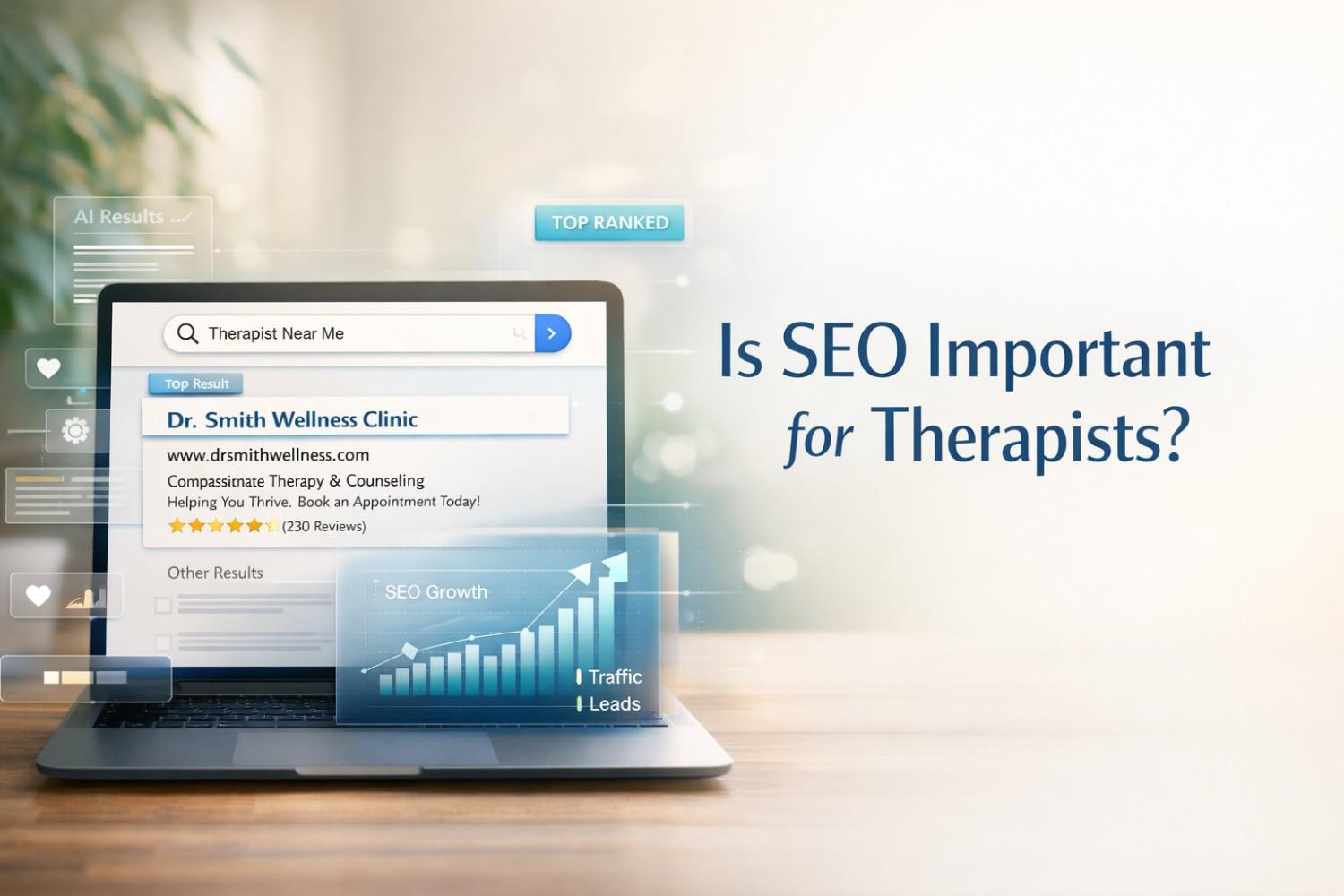

The world of private practice has undergone a massive transformation. Gone are the days when a simple listing in a physical directory or a "word-of-mouth only" strategy could keep a waiting list full. In 2026, the first place a person turns when they feel overwhelmed, anxious, or heartbroken isn’t a phone book—it’s their smartphone.
But as AI-driven search results and "zero-click" answers become the norm in the many practitioners are left wondering: Is SEO still important for therapists?
The short answer is yes—more than ever. However, the way you do SEO has evolved. It’s no longer about just "ranking #1"; it’s about becoming the most trusted, accessible authority in your niche.
Why SEO for Therapists is Non-Negotiable in 2026
In 2026, Google has transitioned from a search engine into an "Answer Engine." With the full integration of AI Overviews, the search giant now summarizes information directly on the results page. For a therapist, this means your content needs to do two things: provide quick, empathetic answers for AI to cite, and offer a deep, human connection that encourages a user to click through and book a session.
The Shift to the Search Generative Experience (SGE)
When someone in New York or Toronto searches for "how to tell if I need couples therapy," Google’s AI might provide a bulleted list of signs. If your blog post is the source of that list, you gain instant credibility. This is why therapy SEO in 2026 focuses heavily on natural language and conversational intent.
Trust as a Ranking Factor (E-E-A-T)
Google categorizes health and wellness as "Your Money or Your Life" (YMYL) topics. To rank, you must demonstrate E-E-A-T: Experience, Expertise, Authoritativeness, and Trustworthiness.
- Experience: Sharing real-world insights (while maintaining HIPAA/PHIPA compliance).
- Expertise: Displaying your credentials (LCSW, PhD, LMFT, RP) clearly.
- Authoritativeness: Being cited by other reputable health sites or local organizations.
- Trust: Having a secure website (HTTPS) and transparent privacy policies.
Local Dominance
Mental health is deeply personal. Even with the rise of telehealth, patients still prefer clinicians who understand their local culture and environment. Local SEO for healthcare ensures that when someone searches for help "near me," your practice is the first one they see.
High-Impact SEO Strategies for Modern Practices
Success in 2026 requires a blend of technical precision and human empathy. Here is how a healthcare digital marketing agency would approach your practice's growth using modern SEO strategies.
1. Master Local SEO for Healthcare
Most therapy is still local or state-based due to licensing regulations. If you aren't in the "Map Pack" (the top 3 local results with a map), you are missing out on 70% of local intent traffic.
- Google Business Profile (GBP): Keep this updated weekly. Post "updates" about your office, holiday hours, and new service offerings.
- Hyper-Local Keywords: Instead of just "therapist," target "anxiety specialist in Austin" or "trauma therapy in Vancouver."
- Review Management: Encourage clients (where ethical/legal) to leave honest feedback. Google's 2026 algorithm prioritizes "review freshness" and specific mentions of services.
2. Technical SEO for Therapists
You could have the most profound blog posts in the world, but if your site takes 10 seconds to load, no one will read them. Technical SEO for therapists involves:
- Mobile-First Design: 80% of mental health searches now happen on smartphones. Your site must be responsive.
- Core Web Vitals: Google rewards sites that are stable, fast, and easy to navigate.
- Schema Markup: This is "code for humans." It tells Google exactly what your services are, your location, and your credentials so you can appear in rich snippets.
3. Content That Answers "The Why"
People don't just search for "therapy." They search for "why do I feel lonely in my marriage?" or "how to stop a panic attack at work."
- Informational Intent: Create long-form guides that explain symptoms and treatments.
- Transactional Intent: Create service pages like "CBT for Depression" with clear "Book Now" buttons.
- Local SEO for medical website: SEO for therapists 2026 Use case studies (anonymized) that reflect the specific stressors of your city or region.
Step-by-Step Process to Optimize Your Website
If you are starting from scratch or refreshing an old site, follow this roadmap to improve your visibility.
Step 1: Keyword Mapping
Identify 5 core services you want to be known for (e.g., Trauma, ADHD, Grief, Teen Counseling). Research what people actually type into Google when they are in distress regarding these topics.
Step 2: Google Business Profile Optimization
Claim and verify your profile. Ensure your Name, Address, and Phone number (NAP) are identical across the web. This is a foundational step for local SEO for healthcare.
Step 3: On-Page Optimization
Add your location and credentials to every Page Title and H1 tag. Ensure your images have "Alt Text" describing the photo for accessibility and search bots.
Step 4: Content Creation & E-E-A-T
Write one "Cornerstone" article (1,200+ words) for each core service. Include your bio at the end of every post to prove your expertise.
Step 5: Backlink Building
Get listed in reputable directories like Psychology Today, GoodTherapy, or local Chamber of Commerce sites. Links from high-authority sites act as "votes of confidence" for Google.
Comparison: SEO vs. Paid Ads for Therapists
Conversion Considerations: Turning Visitors into Clients
Traffic is just a number if it doesn't lead to phone calls. To ensure your SEO strategies actually grow your practice, focus on these conversion elements:
- The "Human" About Page: In 2026, people want to see who they are talking to. Use high-quality, professional yet warm photos. Avoid stock images of "sad people in corners."
- Clear Calls to Action (CTA): Don't make them hunt for the contact link. Use "Schedule a Free 15-Minute Consultation" buttons prominently on every page.
- Online Booking Integration: If a potential client finds you at 11:00 PM during a crisis, they should be able to book a spot or a discovery call immediately.
- Specialty Landing Pages: If you offer specialized psychiatric care, give it its own page. Don't lump "Anxiety" and "Post-partum Depression" into one generic "Services" list. A mental health marketing healthcare digital marketing agency can help you design these for maximum impact.
Conclusion & Next Steps
SEO in 2026 is no longer about "tricking" Google; it is about providing the most helpful, empathetic, and authoritative answer to a person in need. By combining therapist website SEO technical SEO for therapists with a heart-centered content strategy, you ensure your practice remains sustainable for years to come.
Your Next Steps:
- Audit: Check your website speed on mobile today.
- Claim: Update your Google Business Profile with new photos.
- Plan: List 5 questions your clients asked you this week—these are your next 5 blog topics.
- Partner: If you're too busy seeing clients, consult with a healthcare digital marketing agency to automate your growth.
FAQ:
Q: Is SEO worth it for a small private practice?
A: Yes. SEO allows small practices to compete with massive telehealth platforms by winning on "local" and "specialized" search terms that big companies often overlook.
Q: How much does therapy SEO cost in 2026?
A: If doing it yourself, the cost is your time. If hiring a healthcare digital marketing agency, professional services depending on your market's competitiveness.
Q: Can I do my own technical SEO for therapists?
A: While you can handle content, technical SEO for therapists (like schema markup and server optimization) often requires a professional to ensure no HIPAA/privacy leaks occur.
Q: How long does it take to rank on the first page?
A: For a new website in a city like Los Angeles or Toronto, it can take 6–12 months. In smaller towns, you might see results in as little as 3 months.