
.png)



The healthcare landscape has transformed dramatically. Patients now research conditions online, compare providers, and seek credible health information before scheduling appointments. This shift has made digital marketing in healthcare essential for hospitals, clinics, pharmacies, and healthcare professionals looking to remain competitive in 2026.
Whether you're a patient seeking reliable medical information or a healthcare provider wanting to reach more patients, understanding how healthcare digital marketing works is no longer optional—it's imperative. Modern patients expect healthcare providers to have strong online presence, offer educational content, and engage meaningfully through digital channels.
This comprehensive guide walks you through everything you need to know about digital marketing in healthcare, including proven strategies, best practices, and actionable insights tailored for healthcare businesses,providers, and patients.
Understanding Digital Marketing in Healthcare
What Is Digital Marketing in Healthcare?
Digital marketing in healthcare refers to the strategic use of online platforms, digital tools, and technology to promote healthcare services,educate patients, build trust, and drive meaningful engagement. Unlike traditional healthcare marketing relying on billboards and print ads, digital marketing encompasses a wide range of online activities designed to connect healthcare organizations with patients when they need help most.
At its core, healthcare digital marketing serves multiple critical purposes:
- Education: Providing accurate, evidence-based health information
- Trust Building: Establishing credibility and medical expertise
- Patient Acquisition: Reaching potential patients through targeted strategies
- Engagement: Building lasting patient relationships
- Reputation Management: Managing online reviews and feedback
- Accessibility: Making healthcare information available 24/7
Healthcare marketing differs significantly from other industries. It's heavily regulated, requires exceptional accuracy, demands ethical practices,and must prioritize patient safety and privacy above all else. Effective healthcare digital marketing isn't just about getting clicks—it's about building trust and genuinely improving patient lives.
Why Healthcare Digital Marketing Matters in 2026
Over 80% of patients now use search engines and social media to research healthcare providers and medical conditions. This trend accelerated significantly post-2020, and by 2026, digital presence is no longer a competitive advantage—it's essential.
Modern patients expect healthcare providers to be discoverable online,offer telehealth options, and provide educational content. Healthcare organizations with strong digital presence see higher patient acquisition rates and increased appointment bookings.
Key Components of Healthcare Digital Marketing
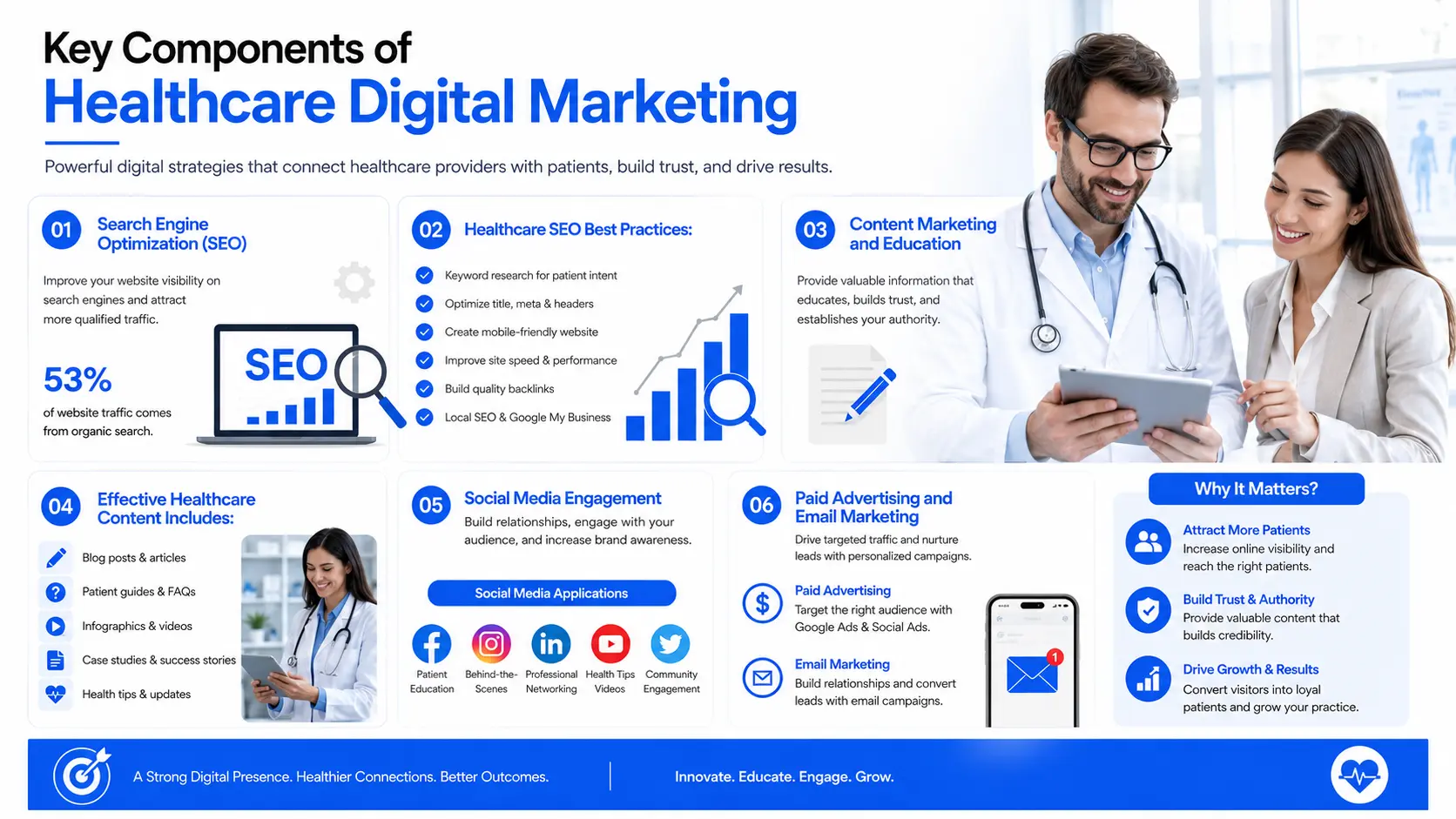
Search Engine Optimization (SEO)
SEO remains the cornerstone of effective healthcare digital marketing.When patients search "best cardiologist near me" or "diabetes symptoms," they're looking for your practice. SEO ensures your content appears at the right moment.
Healthcare SEO Best Practices:
- Creating evidence-based content answering patient questions
- Optimizing Google Business Profile for local search results
- Ensuring mobile-friendly, fast-loading websites
- Demonstrating medical expertise through quality content
- Following Google's "Your Money or Your Life" guidelines for health content
The best healthcare digital marketing agency understand that effective SEO requires nuanced approaches—ranking for the right keywords with content that genuinely helps patients make informed health decisions.
Content Marketing and Education
Content is the backbone of modern healthcare digital marketing. Patients want to understand their conditions, treatment options, and recovery processes.By creating valuable content, healthcare organizations establish themselves as trusted authorities.
Effective Healthcare Content Includes:
- Blog posts addressing common patient questions
- Educational videos explaining procedures and treatments
- Patient testimonials building trust and relatability
- Infographics making medical information digestible
- Whitepapers and eBooks for in-depth guidance
Social Media Engagement
Social media has become powerful for healthcare digital marketing.Platforms like Facebook, Instagram, and LinkedIn allow healthcare organizations to connect with patients, share educational content, build community, and respond to inquiries.
Social Media Applications:
- Facebook and Instagram for community building and patient education
- LinkedIn for B2B healthcare marketing and thought leadership
- YouTube for video-based patient education
- Real-time updates and health alerts on appropriate platforms
However, healthcare social media requires careful attention to HIPAA compliance, patient privacy, and accuracy. All health claims must be substantiated with evidence.
Paid Advertising and Email Marketing
While organic strategies build long-term value, paid patient acquisition. Google Ads, Facebook Ads, and LinkedIn Ads allow providers to reach patients actively seeking their services.
Email marketing remains highly effective, from appointment reminders to educational newsletters, keeping patients engaged and informed throughout their care journey.
Healthcare Digital Marketing Strategies That Drive Results
Building a Patient-Centric Online Presence
The foundation of effective healthcare digital marketing is a patient-centric approach. Every touch point—from your website to social media—should prioritize the patient experience.
Key Elements:
- Clear information architecture helping patients find what they need
- Mobile optimization (60%+ of health searches occur on mobile)
- Accessibility compliance for patients with disabilities
- Trust signals including credentials and testimonials
- Transparent information about services and appointment processes
Online Reviews and Reputation Management
Patient reviews have become critical social proof in healthcare. A comprehensive digital marketing strategy includes active reputation management.
Best Practices:
- Encouraging satisfied patients to leave positive reviews
- Responding professionally to negative feedback
- Monitoring online mentions
- Showcasing testimonials on website and social media
Studies show healthcare providers with strong online reviews see higher patient acquisition rates and increased appointment bookings.
Telehealth Integration
Telehealth adoption has accelerated dramatically. Savvy healthcare digital marketing strategies emphasize virtual care options, attracting patients seeking convenient access without sacrificing quality care.
Create dedicated landing pages for virtual services, produce telehealth benefit content, and integrate appointment booking for virtual visits into your website.
Online Marketing for Hospitals
Large healthcare systems face unique digital marketing challenges. Online marketing for hospitals requires coordinating multiple departments while maintaining brand consistency.
Hospital Digital Marketing Strategies:
- Central brand guidelines ensuring consistency across departments
- Department-specific content addressing specialty-related patient needs
- Unified analytics tracking system-wide performance
- Specialty-specific approaches (oncology differs from orthopedics)
- Patient journey mapping addressing awareness through post-treatment stages
Best Practices and Implementation Tips
Compliance and Regulatory Requirements
Healthcare digital marketing operates under strict regulations. Understanding and following these is non-negotiable.
Key Compliance Areas:
- HIPAA compliance protecting patient privacy
- FDA regulations for health claims and medical devices
- FTC guidelines requiring truthful advertising
- Platform-specific healthcare policies
- WCAG accessibility standards for websites
Measuring Success
Effective healthcare digital marketing tracks meaningful metrics beyond vanity numbers.
Key Metrics:
- Patient acquisition cost
- Appointment booking rates
- Patient retention rates
- Online review ratings
- Return on ad spend
Quick Implementation Steps
Month 1-2:
- Audit current online presence
- Optimize Google Business Profile
- Create content calendar
Month 3-4:
- Launch SEO-optimized blog posts
- Start requesting patient reviews
- Implement email marketing
Month 5-6:
- Launch paid advertising campaigns
- Develop specialty-specific landing pages
- Analyze and optimize results
Conclusion: Taking Action
Healthcare digital marketing is no longer optional—it's essential for patient acquisition and trust building. The question isn't whether to invest in digital marketing, but how to invest strategically and effectively.
Whether you're a hospital system, specialty clinic, pharmacy, or healthcare professional, success requires:
- Commitment to patient education
- Compliance excellence
- Multi-channel integration
- Data-driven optimization
- Professional partnership
If you're ready to strengthen your healthcare organization's digital presence, partnering with specialists who understand both healthcare and digital marketing is invaluable. Rankingeek Marketing Agency brings extensive expertise in healthcare digital marketing, helping hospitals,clinics, pharmacies, and healthcare professionals build trusted online presences that drive real patient outcomes. From SEO strategy to content creation, paid advertising to reputation management, Rankingeek helps healthcare organizations navigate digital marketing with confidence and compliance.
Your patients are searching for you online right now. Make sure they find you.
Also Read: Why Healthcare Websites Lose Rankings After Google Updates (And How to Fix It)
FAQ
Q1: How long does it take to see results from healthcare digital marketing?
A: SEO shows results in 3-6 months, paid advertising within days, and most organizations seem easurable improvement within 90 days.
Q2: What's the difference between healthcare digital marketing and medical digital marketing?
A: Healthcare digital marketing applies to all healthcare organizations, while medical digital marketing specifically focuses on clinical services. Both require regulatory compliance.
Q3: Is social media marketing effective for healthcare providers?
A: Yes, when executed with HIPAA compliance and evidence-based claims for patient education and community building.
Q4: What should be the primary goal of healthcare digital marketing?
A: Patient acquisition and retention while building trust and aligning with broader business objectives.
Q5: How do I find the best healthcare digital marketing agency?
A: Look for proven healthcare experience, regulatory expertise, documented case studies,sector-specific knowledge, and transparent reporting.
Q6: Can small healthcare practices compete with large hospital systems in digital marketing?
A:Yes, by focusing on specific niches, building strong local SEO, and emphasizing your unique value proposition.