




Women across Australia in their forties and fifties now search openly for answers about hot flushes, broken sleep and brain fog. Many then struggle to find a clinic with time to see them. Good women's health clinic marketing meets those women where they search, with credible information, a clinician they can trust, and a clear path to an appointment.
What Helps a Women's Health Clinic Reach Patients Who Are Searching?
Patients searching for menopause and women's health care want credible, practitioner-led content and fast access to an appointment. Clinics win with educational pages that answer real questions and a clear consultation pathway.
Strong local and telehealth visibility puts the clinic in front of those women. Compliant messaging protects it, because Australian law never allows a clinic to promote prescription medicines to the public.
Key Takeaways
- Demand for menopause care keeps rising, and new Medicare items now support GP assessments.
- Clinician-reviewed content on symptoms, stages and consultations builds trust before the first visit.
- Local search and telehealth pages help women find the clinic from home or work.
- Ads and social posts can promote consultations but never prescription medicines or patient testimonials.
- Fast, honest inquiry handling keeps patients engaged while they wait for an appointment.
Why Demand for Women's Health and Menopause Clinics Is Growing in Australia
The average age of menopause in Australia is 51, and most women reach it between 45 and 55. Federal health guidance notes that about one in four women have symptoms severe enough to affect daily life.
Public attention on menopause has also grown quickly. A Senate inquiry reported on menopause and perimenopause in 2024, and new MBS health assessment items for menopause and perimenopause started on 1 July 2024.
- Medicare support for GP assessments: Items 695 and 19000 cover a health assessment of at least 20 minutes, delivered by a GP or a prescribed medical practitioner. These items run for an initial two years.
- Women ready to ask for help: In the 2023 Jean Hailes survey, about a quarter of women aged 45 to 64 said menopause symptoms made daily activities hard.
- A shortage of focused care: Many women still struggle to find a women's health GP with extra training in menopause, so clinics with that focus fill up quickly.
Demand often outpaces available appointments. That makes inquiry handling as important as visibility for any clinic in this field.

Educational Content That Builds Trust With Women Seeking Menopause Care
Women usually research for weeks before they book. Educational content reviewed by a clinician shows that the practice understands their experience and treats it seriously.
Symptoms and Stages of Perimenopause and Menopause
Plain-Language Symptom Guides Reviewed by a Clinician
Separate pages on hot flushes, sleep problems, mood changes and brain fog match the exact phrases women type into Google. Each page should name the reviewing GP and the date of the last review.
Stage Explainers From Perimenopause to Postmenopause
Many women do not realize that symptoms can start years before their final period. A clear guide to perimenopause support answers that question and leads naturally to a consultation.
Treatment Options Explained Without Promoting Medicines
Balanced Overviews of Lifestyle, Non-Hormonal and Hormonal Approaches
A treatment page can describe the broad options that a doctor may discuss, including lifestyle changes and different treatment types. It must avoid brand names, prices, and any wording that promotes a particular medicine. A note that treatment decisions happen in consultation keeps the page educational.
Links to Independent Patient Resources
Links to the Australasian Menopause Society, Jean Hailes, and healthdirect add independent weight. Patients see that the clinic points them to trusted sources, not just its own booking page.
What to Expect at a Women's Health Consultation
First Appointment Steps, Length and Preparation
A short guide on what the doctor asks, how long the visit takes, and what to bring reduces anxiety. A symptom diary template makes the first appointment more useful for both sides. Clinics that offer longer first appointments should say so, because many women have felt rushed before.
Fees, Medicare Rebates and Referral Details
Patients want to know the fee, the rebate, and whether they need a referral. Clear notes on the new menopause health assessment items and any private gap fee remove a major reason to delay booking.
Also Read: Content Marketing for Healthcare and How to Turn Blog Visitors Into Patients
Local SEO and Telehealth Visibility for Women's Health Clinics
Many women search for a menopause clinic near me from their phone during a lunch break. Others prefer a video consultation from home, so a clinic needs visibility in both places.
- A complete Google Business Profile: The profile should list the right primary category, accurate hours, women's health services, and a direct booking link.
- Practitioner bios with real credentials: Each GP page should show qualifications, menopause training, and professional memberships in plain language.
- Suburb and regional pages: Pages for the main suburbs served, with travel and parking details, help the clinic appear in nearby searches.
- Fair review requests: Google reviews about service and communication help local rankings, and every patient can receive the same request. Replies must never confirm a visit or treatment details.
- A dedicated telehealth page: A telehealth menopause consultation page should explain who can book, the fee, and how prescriptions or referrals work afterward.
Medicare rules for GP telehealth often depend on an existing clinical relationship. A telehealth page that explains eligibility and fees upfront avoids confusion and refund requests.
Also Read: Telehealth SEO and How to Market Virtual Care Services and Attract Online Patients
Ads and Social Media Within AHPRA and TGA Advertising Rules
Menopause clinic marketing sits under two sets of rules. The TGA advertising code governs any reference to therapeutic goods, while AHPRA rules govern how registered practitioners advertise their services.
- Prescription medicines stay out of ads: Ads, posts and landing pages cannot promote prescription medicines to the public, including indirect references and abbreviations.
- Clinical testimonials stay out: AHPRA advertising guidelines treat patient comments about clinical outcomes as testimonials, which cannot appear in advertising.
- Promises stay realistic: Claims that a clinic will fix every symptom or restore energy within weeks create unreasonable expectations.
- Clear practitioner details: Titles, qualifications, and registration details should stay accurate in every ad and social profile.
Google and Meta also apply their own healthcare ad policies, which restrict prescription drug terms and some health targeting. Campaigns built around consultations and symptom education run more smoothly on both platforms.
The table below shows how common messages can stay compliant:
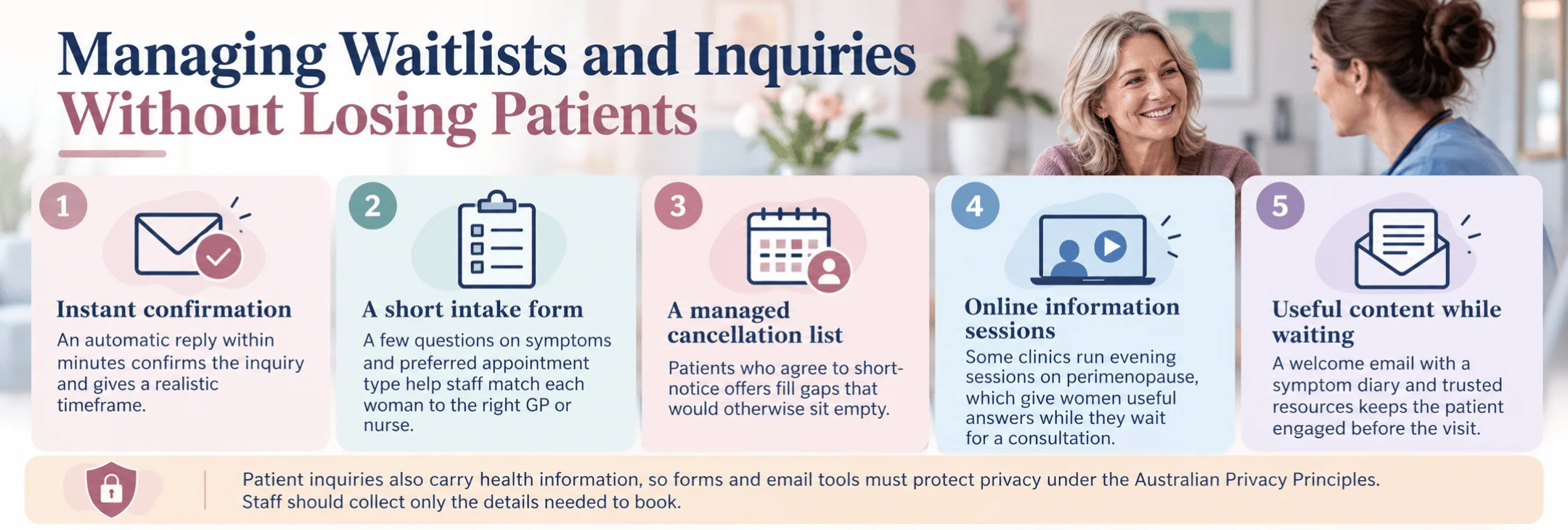
Managing Waitlists and Inquiries Without Losing Patients
A busy clinic can lose more patients through slow replies than through poor visibility. Every inquiry needs a fast, honest answer, even when the next available appointment is weeks away.
- Instant confirmation: An automatic reply within minutes confirms the inquiry and gives a realistic timeframe.
- A short intake form: A few questions on symptoms and preferred appointment type help staff match each woman to the right GP or nurse.
- A managed cancellation list: Patients who agree to short-notice offers fill gaps that would otherwise sit empty.
- Online information sessions: Some clinics run evening sessions on perimenopause, which give women useful answers while they wait for a consultation.
- Useful content while waiting: A welcome email with a symptom diary and trusted resources keeps the patient engaged before the visit.
Patient inquiries also carry health information, so forms and email tools must protect privacy under the Australian Privacy Principles. Staff should collect only the details needed to book.
Final Thoughts on Marketing a Women's Health Clinic in Australia
Australian women are searching for menopause care in greater numbers than ever, and they want answers from clinicians they can trust. Clinics that publish reviewed content, stay visible in local and telehealth search, and respect advertising rules earn that trust before the first visit.
At Rankingeek, we offer women's health clinic marketing for Australian practices facing high demand. Our Practice Growth Infrastructure program is a complete healthcare marketing strategy that covers clinician-reviewed content, local and telehealth visibility, and booking and inquiry systems that keep appointments moving. Our team checks every page and ad against current AHPRA and TGA rules before it goes live.
Frequently Asked Questions
Can Menopause Clinics Advertise Hormone Therapy?
Clinics cannot advertise prescription medicines to the public in Australia, and that includes indirect references. They can promote consultations where a doctor discusses symptoms and treatment options.
Should Women's Health Clinics Offer Telehealth?
Telehealth suits follow-up visits and women who live far from the clinic or work long hours. A clear page on eligibility, fees, and Medicare rules helps patients choose the right appointment type.
How Do Clinics Manage Long Waitlists?
Most clinics combine an instant inquiry reply, a short intake form, and a managed cancellation list. Honest timeframes and helpful resources keep patients engaged until their appointment.
Can Women's Health Clinics Use Patient Reviews in Ads?
AHPRA treats comments about clinical outcomes as testimonials, which cannot appear in advertising. Feedback about service, communication, or the clinic environment remains acceptable.
What Content Should a Menopause Clinic Publish First?
A perimenopause guide, a symptom overview, and a page on what to expect at the first consultation usually come first. These three pages answer the questions most women ask before booking.