


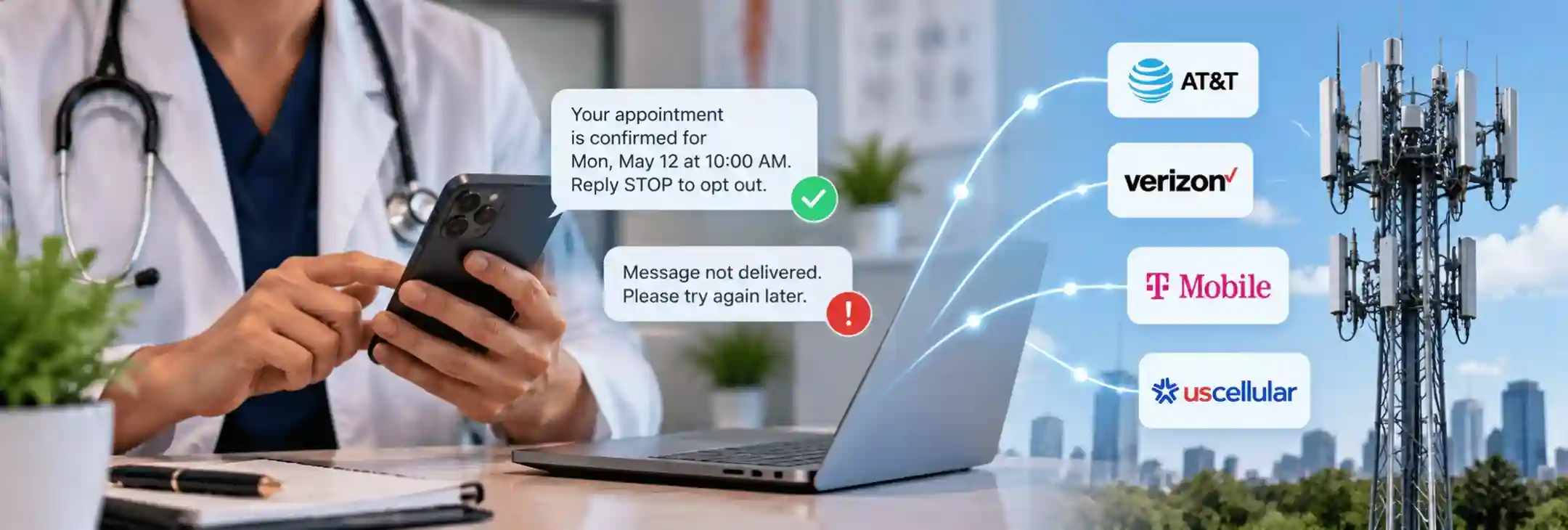

Few things frustrate a front desk more than reminders that never arrive. Patients miss appointments, recalls go quiet, and missed call texts vanish without an error message. The cause in most US clinics is simple. The texting number lacks A2P 10DLC registration, so carriers quietly filter the messages. This guide explains 10DLC registration for healthcare in plain English and shows exactly how to fix it.
Why Are Clinic Text Messages Being Blocked?
US carriers require businesses that text from standard 10-digit numbers to register their brand and campaign through A2P 10DLC. Carriers filter or block unregistered traffic.
The fix usually involves four simple parts. Clinics register, choose the right use case, collect consent and keep texts free of sensitive health details.
Key Takeaways for Practice Managers
- Business texts from unregistered local numbers face heavy filtering by US carriers.
- Registration covers the practice as a brand and each type of messaging as a campaign.
- Clear sample messages and an honest opt-in description speed up approval.
- Patient consent and easy opt-out options protect the clinic under federal rules.
- Texts should confirm logistics, never share diagnoses or test results.
Signs Your Clinic's Texts Are Being Filtered
Carrier filtering rarely announces itself with a clear error. Most clinics notice the symptoms long before they find the cause.
Most texting platforms show delivery rates and error codes in their reports. A sudden drop usually points to a registration or content problem rather than a patient issue.
What A2P 10DLC Is and Why Carriers Enforce It
A2P stands for application-to-person, which describes texts sent from software rather than a personal phone. 10DLC means a standard 10-digit long code, the same kind of number a clinic uses for calls.
Carriers created the system to cut spam and fraud. Each business registers its identity and its messaging purpose with The Campaign Registry, and carriers then decide how much traffic they will trust from that number.
Any unregistered traffic now faces strict filtering. For a clinic, that means reminders and recall texts may simply never reach the patient.

How to Register Your Brand and Campaign
Most clinics register through their texting platform, practice management system or phone provider. The steps look similar on almost every platform.
Brand Details
Brand registration tells carriers who is sending the texts. Details must match official records exactly.
Brand Details Checklist
- The legal business name exactly as it appears on IRS records
- The practice's EIN, which must match that legal name
- A physical street address rather than a post office box
- A live, professional website that names the practice
- A business contact email and phone number
Choosing a Use Case
Each campaign use case describes why the clinic sends texts. A wrong choice is one of the most common reasons for rejection.
Use Case Checklist
- Customer care or account notifications for reminders and recalls
- A mixed use case when one number handles reminders, replies and occasional updates
- A separate marketing campaign for any promotional texts
- A campaign description that matches what the clinic actually sends
Sample Messages
Carriers review the sample messages during approval. They should look exactly like the texts the clinic will send.
Sample Message Checklist
- The practice name at the start of each message
- Plain, realistic wording with no health details
- Opt-out wording such as reply STOP to opt out
- Links on the clinic's own domain rather than shared shorteners
A good sample might read like this. "Smile Dental here. Your appointment is on Tuesday at 10 AM. Reply C to confirm or call us to reschedule. Reply STOP to opt out."
Most rejections come from a handful of avoidable mistakes.
- A legal name or EIN that does not match IRS records
- A website that is missing, unfinished or silent about texting
- A privacy policy that does not explain how the clinic uses phone numbers
- Sample messages that do not match the selected use case
- An opt-in description that does not show how patients agree to receive texts
A clinic that switches texting platforms may also need to register again or transfer its existing registration. Brand vetting usually takes a few business days, while carrier review of the campaign can take longer. Clinics should plan ahead before launching a new reminder system.
Consent Rules for Patient Texts
Registration only helps the clinic's texts reach patients. Text message consent keeps them legal. The federal TCPA includes a healthcare exemption for certain treatment texts, such as appointment and prescription reminders. The exemption comes with strict conditions.
- Texts go only to the number the patient provided
- Each message names the provider and stays within 160 characters
- The clinic sends no more than one message a day and three a week
- Messages contain no marketing, billing or debt collection content
- Every text offers an easy way to opt out, and the clinic honours it immediately
- Texts must be free to the patient
Texts about billing, marketing offers and review requests fall outside that exemption. Clinics should collect clear written consent for those messages, ideally at intake.
Patients can revoke consent in any reasonable way. Common opt-out keywords include stop, quit, cancel and unsubscribe. Clinics must honour those requests within ten business days and may send only one short confirmation text.
Industry CTIA guidelines add their own expectations. The opt-in invitation should explain who is texting, how often and how to stop, and every program should respond to HELP and STOP.
Also Read: The Capacity Problem and How to Scale Your Patient Intake Without Breaking Your Front Desk's Workflow
What Clinics Should Never Put in a Text
Texts can land on a shared phone or a locked screen. Content should stay minimal so a stranger learns nothing private.
- Diagnoses, test results or the name of a condition
- Medication names, procedures or other treatment details
- Insurance details, balances or payment links in treatment reminders
- Links to shared public URL shorteners, which often trigger filters
- Any content involving cannabis, firearms or other restricted topics
Federal health privacy rules limit how clinics share protected health information by text. A reminder that says "You have an appointment Tuesday at 10" works far better than one that names the reason for the visit.
Rankingeek's missed call text back software keeps every message free of health details, records consent for each contact and handles opt-outs automatically.
Also Read: From Clicks to Bookings and How to Build a Patient Funnel That Converts Every Time
Final Thoughts on Fixing Clinic Texting
Each blocked text costs the clinic time and appointments, but the fix is usually straightforward. Registration, the right use case, clear consent and simple message content bring most practices back to reliable delivery.
At Rankingeek, our Booking Bot System supports 10DLC registration for healthcare as part of a complete messaging setup. We configure reminders, recalls and missed-call text back with compliant wording, so patients receive every message they need.
Frequently Asked Questions
How Long Does 10DLC Registration Take?
Brand registration often clears within a few business days. Campaign review by carriers can take longer, especially if the clinic needs to fix rejected details.
Do Appointment Reminders Need Patient Consent?
Many appointment reminders qualify for a healthcare exemption under federal rules, as long as they meet strict conditions. Clinics still benefit from collecting written consent at intake, which also covers messages outside the exemption.
Can I Text Patients From a Toll-Free Number Instead?
Toll-free numbers can send texts, but they need toll-free verification, which is a separate approval process. Many patients respond better to a local number, so most clinics register their existing local line.
Why Do Texts With Links Fail More Often?
Carriers treat shared public link shorteners as a spam signal. Links on the clinic's own website domain deliver far more reliably.
Does Registration Make Our Texts HIPAA Compliant?
Registration only helps texts reach patients. HIPAA compliance depends on message content, consent records and the agreements the clinic has with its texting vendor.