



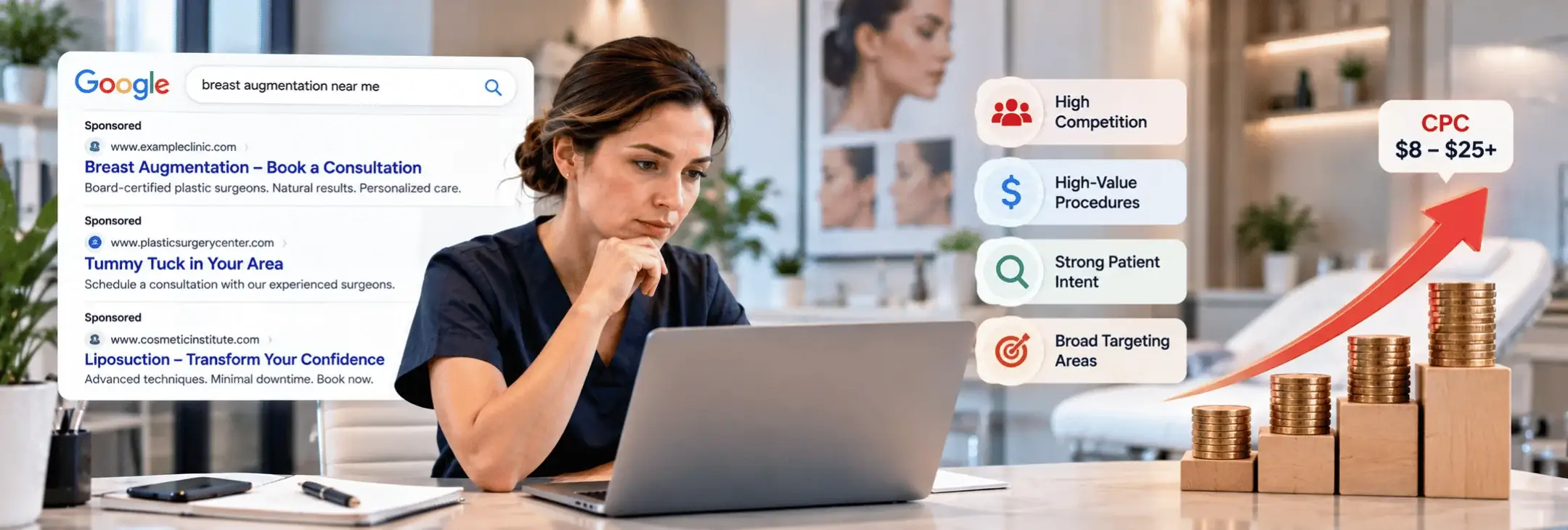
Plastic surgery is one of the most competitive categories in paid search right across the USA. Clicks cost more than in most other specialties, and many leads never turn into consultations. Well-run Google Ads for plastic surgeons fix that with a simple structure and conversion-focused procedure pages. Good tracking then follows each inquiry to a booked and attended consultation, not just a form.
What Makes a Plastic Surgery Google Ads Campaign Work?
The best plastic surgery campaigns keep the structure simple. A few procedure-specific search campaigns lead to dedicated landing pages. Tight negative keywords keep spend on qualified searches. Good tracking then counts booked consultations, not just form fills.
Key Takeaways
- High demand and high patient value push click costs up, so wasted clicks hurt more.
- A handful of procedure campaigns beats a sprawling account with dozens of overlapping groups.
- Each procedure needs its own page with credentials, financing information, and an easy consultation form.
- Google's policies restrict some imagery, so ad copy and images need careful review.
- The right measure is cost per attended consultation, not cost per click.
Why Plastic Surgery Clicks Are So Expensive
Demand stays strong across the USA. Surgeons performed nearly 1.6 million cosmetic surgical procedures in 2024. Liposuction led that list, ahead of every other cosmetic surgery.
Several forces push click prices up.
- High patient value means every practice can justify a strong bid.
- Dense competition in major metro areas puts many surgeons in the same auction.
- Long decision cycles mean patients research for weeks and click several ads before they book.
- Broad searches such as cost or recovery questions attract researchers, not ready patients.
Expensive clicks are not a problem on their own. The real problem is paying for clicks that never become cosmetic surgery consultations. Patients also compare surgeons across several cities and often travel for the right one. That wider search pulls more practices into each auction.
Cost per click alone says little about value. A pricier click that books a consultation often beats a cheap click that never converts.
Also Read: Why Your Google Ads Are Burning Money and the Difference Between Buying Clicks and Buying Bookings
A Simple Campaign Structure That Books Consultations
Complex accounts spread budget thin and hide what actually works. A simple structure keeps spend focused and results easy to read. Most practices need three to five campaigns at most, and many start with two. Google Ads campaign structure for plastic surgeons includes procedure campaigns, ad groups, and landing pages.
Procedure Campaigns
Procedure campaigns group related surgeries, so budget follows the procedures the practice most wants to grow.
Example Campaign Setup
- A breast procedures campaign with ad groups for augmentation and lifts
- A body contouring campaign with ad groups for liposuction and tummy tucks
- A facial procedures campaign with ad groups for facelifts and eyelid surgery
- ZIP code targeting around the practice rather than a loose radius, so ads stay inside the real service area
- A small brand campaign that protects the practice name and the surgeon's name from competitors
Keywords and Negatives
Phrase and exact match keywords keep ads close to real procedure searches. A regular review of search terms shows where money leaks.
Example Negative Keyword List
- Jobs, salary, school and training searches
- Free, cheap and abroad searches that rarely convert
- Pictures, gone wrong and celebrity searches
- Insurance coverage searches for purely cosmetic procedures
Longer date ranges give a fairer picture before anyone pauses a keyword. A single quiet week can make a good keyword look weak.
Ad Copy Within Policy
Google's ad policies shape what these ads can say and show. Google prohibits before-and-after images that promote significant changes to the human body in ads, along with altered close-ups of body parts.
Example Headlines That Stay Within Policy
- Board Certified Plastic Surgeon in a named city
- Private Breast Augmentation Consultations
- Flexible Financing Options Available
Google removed many cosmetic procedures from its sexual content restrictions in 2025, but nudity and sexually suggestive rules still apply. Brand names of prescription injectables can also trigger disapprovals, so copy should name the treatment type instead.
Assets such as sitelinks to each procedure page, call assets, and location assets give ads more space and more reasons to click.
Landing Pages for High Value Procedures
A plastic surgery patient rarely books from a homepage. Each ad group needs a page that matches the procedure and answers the questions patients bring.
- The surgeon's credentials and board certification, stated accurately
- What the procedure involves, recovery time, and realistic expectations
- Results galleries on the website, shown only with patient consent
- Clear financing options and how consultation fees work
- A short consultation form above the fold, plus a phone option
Page speed matters too, since most patients browse on a phone. A slow gallery or long form loses patients before they reach the booking step.
Galleries of before and after photos belong on the website rather than in ads. Federal truth in advertising rules expect results to be typical and honestly presented, so captions should avoid promising the same outcome for everyone.
Also Read: The Anatomy of a High Conversion Landing Page and Why Your Homepage Costs You Leads
Measuring Consultations, Not Clicks
A form fill is only the first step. Real performance shows up further down the path.
- Form fills and calls show initial interest.
- Lead qualification checks basic criteria such as procedure, location, and timing.
- Consultation bookings confirm genuine intent from serious patients.
- Consultation attendance reveals the true consultation show rate.
- Surgery bookings show which campaigns produce real revenue.
Offline conversion import sends booked and attended consultations from the CRM back into Google Ads. Smart bidding then learns to find patients who book, rather than people who simply fill out forms.
A short weekly check of new leads by the front desk adds a useful quality signal. The team can tag each lead as qualified or not, which sharpens the picture for every campaign.
Health privacy rules limit what a practice can share with ad platforms. Conversion tracking should use neutral event names and never pass procedure details tied to a person.
The key number is cost per consultation, measured over longer periods rather than a single week. Practices that track lead quality this way can shift budget toward the procedures that fill the surgical calendar.
When to Bring In a Specialist Agency
Many surgeons start Google Ads themselves or hand them to a general agency. A specialist partner makes sense when certain signs appear.
- Spend keeps rising while consultations stay flat
- Reports show clicks and impressions but no booked consultations
- Ads or landing pages face repeated policy disapprovals
- Nobody on the team has time for weekly search term reviews
- The practice wants to grow one procedure without hurting others
- The tracking stops at form fills, with no link to the practice CRM
A Google Ads specialist with healthcare experience brings policy knowledge, cleaner tracking, and a structure built around consultations rather than clicks. A good partner also explains results in plain language and never hides behind clicks or impressions.
Final Thoughts on Google Ads for Plastic Surgery Practices
Plastic surgery clicks will always cost more than most specialties, but they do not have to waste money. A simple structure, strong procedure pages, and tracking that follows each lead to a consultation turn search spend into booked surgeries.
At Rankingeek, our Paid Patient Acquisition service runs Google Ads for plastic surgeons who would rather spend time in the operating room than in an ad account. We build procedure campaigns, policy-safe ads, and consultation-focused tracking, then report on the results that matter.
Frequently Asked Questions About Plastic Surgery Google Ads
How Much Do Plastic Surgeons Spend on Google Ads?
Budgets vary widely with location, procedures, and competition. A fair budget gives each priority procedure enough clicks to produce consultations, and practices should judge it by cost per consultation rather than total spend.
Can Plastic Surgeons Use Before and After Photos in Ads?
Google prohibits before-and-after images that promote significant changes to the body in ads. Practices can show results galleries on their own website with patient consent and honest captions.
Should I Bid on Competitor Surgeons' Names?
Google allows bidding on competitor names as keywords, but trademark rules limit using them in ad text. Many practices avoid it because the leads convert poorly and it can strain professional relationships.
How Long Before Google Ads Bring Consultations?
Most practices see first inquiries within days of launch. Stable, profitable results usually take a few months of search term reviews and landing page testing.
Should Plastic Surgeons Run Performance Max Campaigns?
Search campaigns usually give plastic surgeons more control over keywords, placements, and spend. Other campaign types can work later, once conversion tracking reliably counts real consultations.