
.png)



Your clinic website may be sharing more than you think. A single HIPAA tracking pixel on an appointment page can send a visitor's details to an ad platform within seconds. Most practice owners never see it happen, because the code works quietly in the background. This guide explains where the risk sits, what the rules say today, and how a safer setup protects your patients.
Can a HIPAA Tracking Pixel Put Your Practice at Risk?
The short answer is yes. A HIPAA tracking pixel creates exposure when it sends identifiable visitor data from health-related pages to an outside vendor. The fix starts with an audit of every tag on your site. Your team then removes pixels from sensitive pages and moves to BAA-backed or server-side tracking.
What Counts as PHI on a Clinic Website?
HIPAA applies to covered entities and the vendors that handle their health data. A clinic that files insurance claims or checks eligibility electronically falls into this group, regardless of size. Vendors that analyze data or process billing for that clinic become business associates.
Protected health information (PHI) is health data that points to a real person. It relates to someone's past, present or future health, care or payment for care. It also identifies that person or provides a reasonable basis to identify them.
The identifying part on a website often comes from details nobody thinks twice about. A tracking script can capture items like these:
- Medical record numbers and appointment dates
- Home and email addresses
- IP addresses and geographic location
- Device IDs and other unique codes
A visitor does not need an existing patient relationship for this data to count as PHI. A public library computer is a rare exception, since its IP address doesn't tie back to one person.
Where Tracking Pixels Leak Patient Data
A HIPAA tracking pixel is a tiny image or snippet of code that reports visitor activity to the company that built it. Meta and Google tags work this way, and many of them keep following users after they leave your site.
Most sites also use cookies, session-replay scripts that record clicks and typing, and fingerprinting tools that read device settings. The highest risk sits on pages where visitors log in or share health details:
- Patient portals and telehealth accounts: Tags on these pages can reach diagnoses, prescriptions, bills and appointment history.
- Appointment booking forms: A pixel can grab the patient's email and the reason for the visit as they type.
- Symptom checkers: Answers about symptoms can travel to a vendor along with an identifier.
- Login and registration pages: These pages sit outside the portal, yet the names, emails and credentials people enter still count as PHI.
- Clinic mobile apps: A diabetes app that logs glucose levels sends PHI whenever it shares data with a tracking vendor.
A simple case shows the danger. A patient books a cardiology visit, and the pixel on that page sends the page address and a hashed email to an ad platform. That platform now holds health data tied to a real person.
Also Read: Medical Website SEO Audit Checklist 2026 and the Issues to Fix First
What HHS Guidance Says (and What the 2024 Court Ruling Changed)
The Office for Civil Rights at HHS issued its online tracking bulletin in December 2022 and revised it in March 2024. Its core message is clear. A practice cannot use any tag in a way that exposes PHI without permission under the Privacy Rule.
Marketing makes the point plain. A clinic that shares PHI with an ad platform for marketing, without the patient's written HIPAA authorization, makes an impermissible disclosure. Such a leak can reveal a diagnosis, therapy visits or where someone seeks care.
The harm can include stigma, discrimination, identity theft and financial loss. OCR now puts Security Rule compliance first in these investigations. Investigators look for proof that a practice found, assessed and reduced the risks its tracking technologies or tools create.
What the 2024 Court Ruling Changed
A federal court in the Northern District of Texas ruled on June 20, 2024, in American Hospital Association v. Becerra. The court vacated one part of the guidance. That part said HIPAA applied whenever a tool linked an IP address to a visit on a public page about a condition or a provider. HHS withdrew its appeal in August 2024, so the ruling stands.
The ruling did not clear marketing pixels in healthcare websites for every page. Portals, booking forms, symptom checkers and anything a visitor types still fall under the remaining guidance. HHS says it is weighing its next steps and has not revised the guidance since.
HIPAA is not the only risk either. State wiretap laws such as the California Invasion of Privacy Act let visitors sue when a third party captures their activity without consent. Washington's My Health My Data Act also requires authorization before anyone sells consumer health data.
The table below shows how healthcare website tracking risk changes by page type.
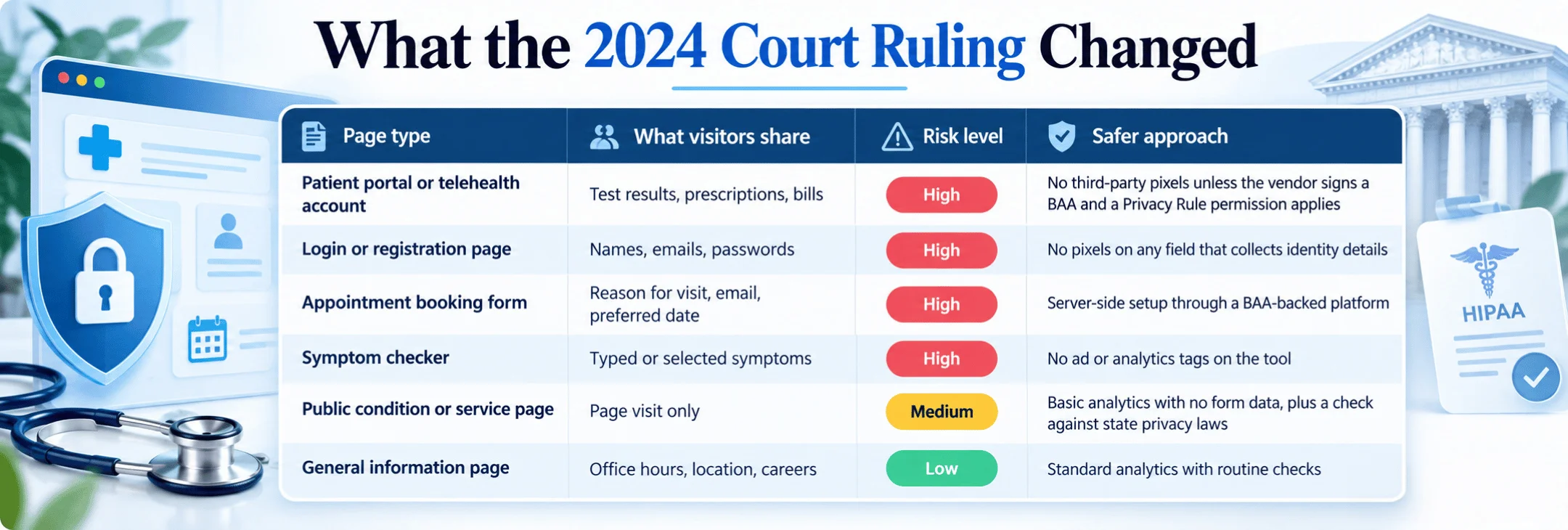
How to Set Up HIPAA-Safe Tracking on Your Clinic Website
HIPAA-compliant tracking does not mean you stop measuring ads. It means patient details never reach a vendor without the right legal cover. Three layers work together to make that happen.
Server-Side Tagging
Server-side tagging changes the path your data takes. The browser sends events to a platform that has signed a BAA with your practice. That platform removes identifiers before anything reaches an ad network that refuses to sign one.
Steps for a Server-Side Setup
- Your team picks a customer data platform or tagging vendor that will sign a BAA.
- The website sends events to that platform first, not straight to Meta or Google.
- The platform strips names, emails, IP addresses and other identifiers from each event.
- Only data without identifiers moves on to ad and analytics tools.
- Encryption protects the data in transit, and access controls limit who can view it.
Consent and BAAs
A Business Associate Agreement (BAA) is a contract that holds a vendor to HIPAA safeguards. It spells out how the vendor may use PHI, how it protects that data and how it reports security incidents. A BAA still falls short alone, because a Privacy Rule permission must also apply. Cookie banners create a common blind spot. A banner that asks visitors to accept or reject cookies is not a valid HIPAA authorization. A line in your privacy policy does not count either.
Steps for Consent and BAAs
- The practice lists every vendor whose tag fires on the site.
- Each vendor that receives PHI signs a BAA before any data flows.
- The practice confirms that a Privacy Rule permission covers each disclosure.
- A vendor without a BAA receives no PHI unless the patient signs an authorization first.
- A vendor's promise to strip data after receipt carries no weight, since the disclosure has already happened.
Page Level Exclusions
Page-level exclusions keep risky tags away from your most sensitive pages. This layer protects you even when a rushed campaign adds a new tag. A clean site structure makes it easier to manage, and the healthcare website development team builds these rules in from day one.
Steps for Page-Level Exclusions
- The team sorts every page into high-risk and lower-risk groups.
- Portals, login pages, booking forms and symptom checkers go into the high-risk group.
- Office hours, location and careers pages go into the lower-risk group.
- Tags without a BAA stay off the high-risk group entirely.
- Regular tests confirm those tags stay off, because template changes and new campaigns often bring them back.
What to Do If Your Website Already Runs HIPAA Tracking Pixel
Many clinic sites still carry Meta and Google tags from older campaigns. A tag inventory only shows what each tag can collect. The real payload, meaning the data a tag sends when it fires, shows what actually left your site.
Tracking Audit Checklist for Clinics
A solid audit covers these points:
- Every page has a known list of tags, including any that sit outside your tag manager.
- Test bookings and portal logins use fake patient profiles, never real records.
- Each test records what every tag sends at each step and under each consent choice.
- No payload carries names, emails, IP addresses or health details to a vendor without a BAA.
- Your risk analysis now covers tracking tools and the safeguards around them.
- Scheduled checks run after every site release and every new campaign.
Some audits uncover a past leak. HIPAA presumes a breach when PHI reaches a vendor without a BAA and without permission, unless the practice can show a low probability of compromise. Breach notification may then need to reach affected patients, the HHS Secretary and sometimes the media. Your legal counsel should guide that call.
Also Read: The ROI of Transparency and How to Track Every Marketing Dollar to a Patient
Final Thoughts on HIPAA Tracking Pixel
HIPAA tracking pixel helps clinics see which ads bring in patients. They can also hand private details to companies that should never hold them. The safest path pairs a full audit with page-level exclusions, signed BAAs and a server-side setup.
Rankingeek Marketing Agency works with US healthcare practices, so patient data privacy shapes every campaign and website we build. Our team audits the tags on your clinic website, removes pixels from portals, booking forms and other sensitive pages, and rebuilds your healthcare website tracking around server-side tools.
Frequently Asked Questions
Is the Meta Pixel HIPAA compliant?
The Meta Pixel is neither safe nor unsafe on its own. The risk depends on where it fires and what it sends. A pixel that passes PHI from a portal or booking form to Meta without a BAA creates a clear violation risk.
Can a medical practice use Google Analytics 4?
A practice can run Google Analytics on pages that never touch patient details, such as office hours or job listings. The trouble starts when GA4 fires on portals, forms or booking flows. A BAA-backed data platform can remove identifiers before data reaches analytics.
Do I need a BAA with my analytics vendor?
You need one whenever the vendor creates, receives, maintains or transmits PHI for your practice. The agreement and a Privacy Rule permission must both exist before any PHI moves. A vendor that refuses to sign should receive no PHI without patient authorization.
Does a cookie consent banner make tracking compliant?
A cookie consent banner does not satisfy HIPAA. A click on accept is not the same as a signed authorization. The banner may still help with other privacy laws.
Did the 2024 court ruling make HIPAA tracking pixel legal on clinic websites?
The ruling did not give clinics a free pass. It removed only part of the guidance about IP addresses on public health pages. Portals, booking forms and anything visitors type still fall under the HIPAA rules.